
Daily Zohar 1163
Daily Zohar 1163
Zohar Pinchas, Vol. 20 (English)/Vol 15 (Hebrew)
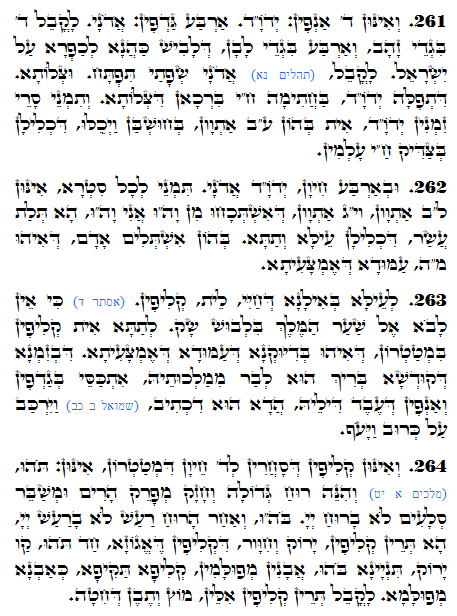
Hebrew translation:
262. וּבְאַרְבַּע חַיּוֹת, יְהֹוָ”ה אֲדֹנָי. שְׁמוֹנָה לְכָל צַד – הֵם ל”ב אוֹתִיּוֹת, וְי”ג אוֹתִיּוֹת שֶׁנִּמְצְאוּ מִן וָה”וּ אֲנִי וָה”וּ. הֲרֵי שְׁלֹשָׁה עָשָׂר שֶׁכְּלוּלִים לְמַעְלָה וּלְמַטָּה, בָּהֶם הִשְׁתַּלֵּם אָדָם, שֶׁהוּא מ”ה, עַמּוּד הָאֶמְצָעִי.
263. לְמַעְלָה בְּעֵץ הַחַיִּים אֵין קְלִפּוֹת, (אסתר ד) כִּי אֵין לָבֹא אֶל שַׁעַר הַמֶּלֶךְ בִּלְבוּשׁ שָׂק. לְמַטָּה יֵשׁ קְלִפּוֹת בִּמְטַטְרוֹן, שֶׁהוּא בִּדְמוּת הָעַמּוּד הָאֶמְצָעִי. שֶׁבִּזְמַן שֶׁהַקָּדוֹשׁ בָּרוּךְ הוּא מִחוּץ לְמַלְכוּתוֹ, מִתְכַּסֶּה בְכַנְפֵי וּפְנֵי הָעֶבֶד שֶׁלּוֹ, זֶהוּ שֶׁכָּתוּב (שמואל-ב כב) וַיִּרְכַּב עַל כְּרוּב וַיָּעֹף.
264. וְאוֹתָן קְלִפּוֹת שֶׁסּוֹבְבוֹת לְאַרְבַּע חַיּוֹת מְטַטְרוֹן הֵן: תֹּהוּ – (מלכים-א יט) וְהִנֵּה רוּחַ גְּדוֹלָה וְחָזָק מְפָרֵק הָרִים וּמְשַׁבֵּר סְלָעִים לֹא בָרוּחַ ה’. בֹּה”וּ – וְאַחַר הָרוּחַ רַעַשׁ לֹא בָרַעַשׁ ה’. הֲרֵי שְׁתֵּי קְלִפּוֹת, יָרֹק וְלָבָן. שֶׁקְּלִפּוֹת הָאֱגוֹז – אֶחָד תֹּהוּ, קַו יָרֹק. שֵׁנִי בֹּהוּ, אֲבָנִים מְפֻלָּמוֹת, קְלִפָּה חֲזָקָה כְּאֶבֶן מְפֻלֶּמֶת. כְּנֶגֶד שְׁתֵּי קְלִפּוֹת אֵלּוּ, מוֹץ וְתֶבֶן שֶׁל חִטָּה.
Pinchas 261-264
When the High Priest on Yom Kippur wore 8 garments. Four garments of gold for the name ADNY אדני that is the aspect of Malchut and four garments of white color for the YHVH name. The four gold garments used when processing the sacrifices and the whites when he went into the Holy of Holies. With the connection of the upper and lower names, the High Priest could draw the light to cleanse all Israelites.
Our silent prayer (in standing position) before the end of the prayer, is like going into the Holy of Holies. It connects us to the world of Emanation, Atziluth that is the ‘fountain’ of light that comes from the Endless. The 18 blessings have the YHVH name in each of them and their 72 letters give us a high connection. They are the bridges of the light to the world.
When we are ‘climbing’ the higher levels we ‘shed’ the Klipot until we reach the level of Metatron that is the ‘guardian’ of the gates to the upper three Sefirot. He pushes away any Klipot that comes closer to him and if our prayers are pure then he carries them inside and delivers Light in return.
Every word and letter in our prayers is a tool in building ladders to the upper world. The consciousness that ‘propels’ them to the higher level determines if they are accepted or pushed away by the ‘guardian’.
{||}




“Our silent prayer (in standing position) before the end of the prayer”, here we are referring to the Shmonei Esre prayers because it originally contained 18 blessings. An additional blessing was eventually added to the order to make a total of 19 blessings. The Shmonei Esrei is also called the Amidah, which means standing, because we stand in one place with our feet together as the Angels stand and in silence. These blessings are all within the world of Atzilut, the highest point. Another bit of information that is presupposed is that this is only true for the Morning (Shacharit) prayers during the weekdays and does not include Shabbat.
But, we do not begin in the world of Atzilut. We first begin in the world of Assiyah until the end of Lam’natzayach, the prayer that is shaped like the menorah.
We now enter the World of Yetzirah (World of Formation) with the prayer and then the World of Beriyah (World of Creation). After the Shmonei Esre prayers we descend back through the worlds in reverse order.
Most prayer books do not include this information and are only printed in Hebrew. Only specific Kabbalistic Siddurim and some Sephardi Siddurim. Many of the on-line Jewish Bookstores have this type of Siddurim available. And I appologize in advance, but I cannot recommend a particular on-line store.
Blessings and Light.
May all who read the Zohar become blessed with the Light of HaKadosh Baruch Hu and reflect this light throughout the world. May you have all that is good from heaven, and your years be long.
Shabbat Shalom from Tzfat, Israel (The holy city of Kabbalah and Kabbalists)
thank you for that insight. it really would be useful to have a reference.
Reference to what part?
Thank you Baruch for adding value to the Daily Zohar with your wise comments.
Many of the Daily Zohar subscribers has great knowledge and experience in the different area we discuss in our study.
To everyone: Please share your learning and experience with the world. We have tens of thousands of visits a month and sharing your comments add significantly to many others. With that you increase your spiritual vessel even if you add comments using alias name.
Dear Baruch
Thank you for this information!
Love and light x
Does it matter if we say those prayers in Hebrew? And if so does the person have to know the meaning of these words or is just reading or scanning them fine? Thank you.
Hebrew is a language that help us communicate with the spiritual worlds.
Sometimes understanding the Hebrew language could be a distraction from the deep spiritual meaning because one’s understanding get ‘locked’ in the simple literal meaning. The highest level of connection in our prayers is done without a sound. We read and may move our lips as we speak the words but we should not utter them or at least it shouldn’t be heard by another person standing next to us. WHY? because the sound produce effect in the lower level and it ‘lower’ us down. Also it is not good to look around during the silent prayer. It is important to read/scan the Hebrew for the spiritual connection. It is perfectly okay to read the translations before to have a prepared vessel but focus on the Hebrew even if you prayer book has translation.
Some prayer books has transliteration that is very good and allow the person to say the Hebrew word but always look at the Hebrew while reading the transliteration.
We need to have the general idea of what the Hebrew connection is about in order to have a better vessel for the light of the connection that comes ONLY through the Hebrew words.
Hebrew = עברית
עב = the 72 bridges as we explained in previous DZ and will continue in the next DZs
עבר = transfer
י = Numerical value 10 = reference to the 10 Sefirot
ת = the last letter of the Hebrew letters= מלכות Malchut.
The Hebrew letters transfer the Light of the Tree of Life to the world.
Hello Zion.
Our dearest friend, brother
thank you for your all help.
ı have a question about reading shema prayer during a pray.
isn’t it better to read or scan it too.
since it’s the most known prayer which most of the people in the bet kneset know it without looking the book, ı guess it’s better to read from the book. is it right like reading zohar? thank you
Dear Reuven
I personally feel nothing when I say the prayers in English, but I have a siddur which I am very comfortable with:
Sephardi Siddur Linear Transliteration with English Translation, Lev Eliezer by Eastern Book Press Inc Monsey, NY.
I always say the transliteration otherwise I would be standing for one hour at the standing prayer!
Hope that helps.
Shabbat Shalom
Daliah, I often feel the same way when I say it in Hebrew without knowing the meaning. I also often times feel like it is forced…I want to express my gratitude to HaShem in my own words from my own heart, not through a “script” that someone who I have no personal connection with wrote. If that makes any sense.
Reuven, hitbadadut is a form of “free form” prayer that is widely accepted among many sects of Judaism. David HaMelech used to do it, Shlomo HaMelech did, etc. There are many examples throughout the TaNaK that give us examples of such prayer. After you scan the Hebrew start your own prayer. There’s no reason why we can’t. HaKadosh Baruch Hu wants to hear what’s on your mind, how you feel, what you like and don’t like. He also wants to hear in our own words how we have failed. Many times when we walk down the street we are busy thinking about other things. This would be a perfect time to look to heaven and say thank you. When someone hits our car in the parking lot is a perfect time to say thank you. When our children do something nice for someone else is a perfect time to say thank you. When HaKadosh Baruch Hu closes one door it’s so another door can be opened.
In the Ashrei towards the end we pray “poteach et yadecha. Umazbeach l’chol chai ratzon.” (Open your hands. And I will supply all your desires). What does this mean. All we have to do is open our hands? Yes, in a manner of speaking. What isn’t specifically written is that we’re holding onto things, ideas, opinions, beliefs, etc. that we really don’t need. We should as the Notzrim used to say, “Let go and let G-d”, so to speak.
The prevalent custom here in Israel is for everyone to walk down the street while talking on their cell phone. We don’t own a cell phone, so we’re able to see what they are doing to the culture and the opportunity to pray, to say psalms, to talk to HaKadosh Baruch Hu.
Light and Love from the holy city of Tzfat, Israel
Baruch, thank you for your wonderful words. I understand and do talk to HaShem from my own heart, what I meant in my earlier post is that the prayers that are in the siddur are some one else’s words and I am being forced to say them as part of a “religious” ritual or else I don’t fit in or G-d forbid not make G-d happy. I guess my question is why are we required to pray with a script instead of our spirit?
Thanks again for the every day light!
Shabbat Shalom Dear Zion!
I find interesting “coincident” this morning I was studying Vayikra title verse “I acknowledge my sin to you” and I think I understood your lesson a little bit deeper. Thank you for being in the right place at the right time in my life! Shabbat shalom Zion!!!
Proverbs 16:7
When a man’s ways please the LORD, He makes even his enemies to be at peace with him.
If our prayers are pure the ‘guardian of the gates’ takes them inside and delivers Light in return and if not pure then pushes them away.
The answer is ‘yes’. The answer is ‘no.’ The answer is ‘not yet.’
How do the Klipot constrain a person and limit his abilities and spiritual vision? Thank you.
How can we learn more about the Angel Metatron and his duty? Thanks for everything and chag sameach. Orah
There are many references to the archangel Metatron in the Zohar. The Daily Zohar follows the Zohar and provide study on the special role of this special angel. Google shows 1340 links to Metatron on the Daily Zohar.
Search on “Metatron “. Copy and paste into Google search (without the quotes).
When you add ‘site:dailyzohar.com’ at the end of your search terms, Google with show results from the specified site.
Thank you. Chag sameach
Thank you Zion Beautiful
Amen.
I appreciate the comment you stated about scannning or reading prayers in Hebrew or passages of the Zohar silently because that is what I have been doing. I read somewhere that when you scan the passages your soul does comprehend what you are scanning. So that eventually in your daily life you experience what the meaning of the passage was. By this I mean that you see changes in your thinking and behavior towards others. I wrote this because I do not know how to speak,write, or read Hebrew and I was planning on learning the Hebrew language just for the Zohar readings. Please let me know what you think, Zion.