
 Previous: Vayikra
Daily Zohar # 5110 – Vayikra – Waters of Noah or waters of the Flood
Daily Zohar 5110
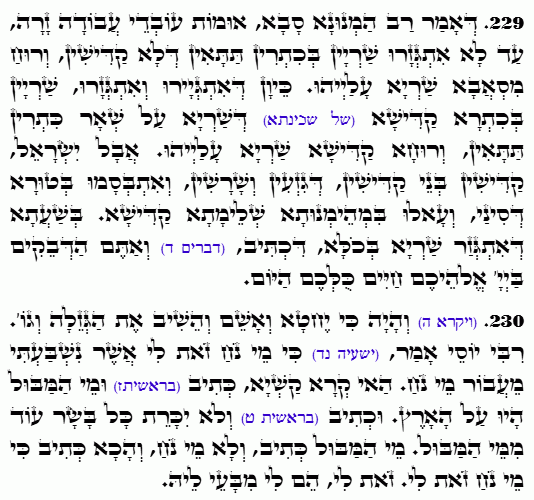
Hebrew translation:
230. וְהָיָה כִּי יֶחֱטָא וְאָשֵׁם וְהֵשִׁיב אֶת הַגְּזֵלָה וְגוֹ’. רַבִּי יוֹסֵי אָמַר, (ישעיה נד) כִּי מֵי נֹחַ זֹאת לִי אֲשֶׁר נִשְׁבַּעְתִּי מֵעֲבֹר מֵי נֹחַ. הַפָּסוּק הַזֶּה קָשֶׁה, כָּתוּב (בראשית ז) וּמֵי הַמַבּוּל הָיוּ עַל הָאָרֶץ, וְכָתוּב (שם ט) וְלֹא יִכָּרֵת כָּל בָּשָׂר עוֹד מִמֵּי הַמַּבּוּל. כָּתוּב מֵי הַמַּבּוּל, וְלֹא מֵי נֹחַ, וְכָאן כָּתוּב כִּימֵי נֹחַ זֹאת לִי. זֹאת לִי?! הֵם לִי הָיָה צָרִיךְ לִהְיוֹת!
.
Zohar Vayikra
Continued from previous DZ
#229
Rabbi Hamnuna Saba said: The nations of the world (עכו״ם), before they circumcise, dwell in the lower crowns that are not holy, and the spirit of impurity dwells upon them. Once they convert and are circumcised, they dwell in the holy crown that dwells upon the other lower crowns — which is Malchut — and a holy spirit dwells upon them.
But Israel is holy, children of holy ones in their stem and root, and they were sanctified on Mount Sinai, and they entered into perfect holy faith. At the hour they are circumcised, they dwell in everything — that is, in Zeir Anpin and in Malchut, which are called day and night. As it is written: “וְאַתֶּם הַדְּבֵקִים בַּיהוָה אֱלֹהֵיכֶם חַיִּים כֻּלְּכֶם הַיּוֹם” “But you who cleave to YHVH your God are alive, all of you, this day” (Deuteronomy 4:4).
Notes:
Rabbi Hamnuna Saba contrasts the spiritual state before and after conversion: Gentiles initially dwell under impure lower crowns with a spirit of impurity (טומאה, tumah). Through conversion and circumcision, they ascend to Malchut (the holy crown over the lower ones), receiving a holy spirit and becoming ger tzedek. Israel, however, originates from a holy root purified at Sinai and enters perfect faith. Upon circumcision, they fully unite with both Zeir Anpin (day/Chesed) and Malchut (night/din sweetened), achieving complete wholeness (“day and night”). The verse “you who cleave to YHVH your God are alive, all of you, this day” affirms Israel’s inherent, eternal life-force through this full attachment to the divine masculine-feminine structure, beyond the partial elevation of converts. This highlights the unique merit of Israel’s soul-root while affirming the transformative holiness attained by righteous converts in Malchut.
#230
“וְהָיָה כִּי יֶחֱטָא וְאָשֵׁם וְהֵשִׁיב אֶת הַגְּזֵלָה וְגוֹ’” “And it shall be, when he sins and becomes guilty, that he shall restore the stolen item” etc. (Leviticus 5:23). Rabbi Yosi said: “כִּי מֵי נֹחַ זֹאת לִי אֲשֶׁר נִשְׁבַּעְתִּי מֵעֲבוֹר מֵי נֹחַ עוֹד עַל הָאָרֶץ” “For this is to Me as the waters of Noah, when I swore that the waters of Noah would never again pass over the earth” (Isaiah 54:9).
This verse is difficult, for it is written: “וּמֵי הַמַּבּוּל הָיוּ עַל הָאָרֶץ” “And the waters of the flood were upon the earth” (Genesis 7:10), and “וְלֹא יִכָּרֵת כָּל בָּשָׂר עוֹד מִמֵּי הַמַּבּוּל” “And all flesh shall never again be cut off by the waters of the flood” (Genesis 9:11) — it says “waters of the flood” and not “waters of Noah.” Yet here it says “waters of Noah.” Moreover, it should have said “זֹאת לִי” “this is to Me,” but it is written “זֹאת לִי” [as if emphasizing “this to Me”].
Notes:
Rabbi Yosi raises two textual difficulties in Isaiah 54:9: First, why does the verse call the flood “מי נח” (“waters of Noah”) when the Torah consistently refers to them as “מי המבול” (“waters of the flood”)? Second, why the unusual phrasing “זאת לי” (“this to Me”) instead of simply “זאת” or “לי זאת”? These questions set the stage for a deeper kabbalistic interpretation: the “waters of Noah” allude to a specific spiritual rectification tied to Noah’s merit and the covenant after the flood. The shift from “flood” to “Noah” hints at the personal, covenantal aspect — the waters were sweetened and bound by divine oath through Noah’s righteousness, transforming global judgment into an eternal promise of mercy. The emphatic “this to Me” underscores that this oath is uniquely bound to Hashem’s personal divine commitment that protects creation forever, linking back to brit, mercy overcoming judgment, and the enduring covenant even after the judgment of the flood.
{||}

 Join Zohar Sparks - Telegram (Not a chat group)
 Join on WhatsApp (Not a chat group)
 Join on Signal (Chat is available only in this group)