 Previous: Vayikra
Daily Zohar # 5148 – Vayikra – Who could lead the prayers or blow the shofar
Daily Zohar 5148
Hebrew translation:
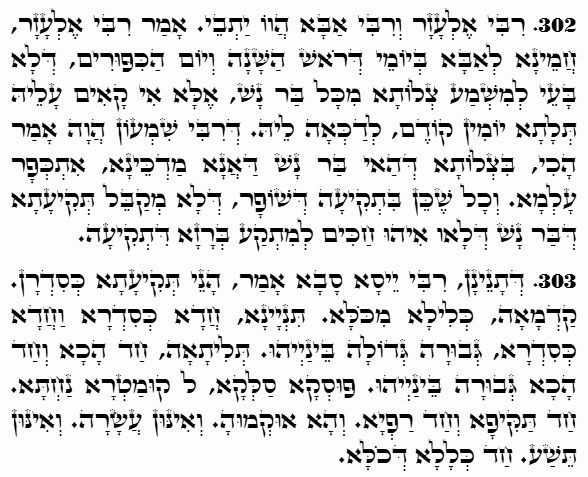
303. שֶׁשָּׁנִינוּ, רַבִּי יֵיסָא סָבָא אוֹמֵר, הַתְּקִיעוֹת הַלָּלוּ כְסִדְרָן. הָרִאשׁוֹנָה כְּלוּלָה מֵהַכֹּל. הַשְּׁנִיָּה – אַחַת כְּסֵדֶר וְאַחַת כְּסֵדֶר, גְּבוּרָה גְדוֹלָה בֵּינֵיהֶם. שְׁלִישִׁית – אַחַת כָּאן וְאַחַת כָּאן, וּגְבוּרָה בֵּינֵיהֶם. הַשֶּׁבֶר עוֹלֶה, וְהַתְּרוּעָה יוֹרֶדֶת. אַחַת קָשָׁה וְאַחַת רָפָה. וַהֲרֵי פֵּרְשׁוּהָ. וְהֵן עֶשֶׂר. וְהֵן תֵּשַׁע. כְּלָל אֶחָד שֶׁל הַכֹּל.
.
Zohar Vayikra
Continued from previous DZ
#302
Rabbi Elazar and Rabbi Abba were sitting. Rabbi Elazar said: I saw my father on Rosh Hashanah and on Yom Kippur — he did not want to hear the prayer from any person unless he had taught that person for three days beforehand to purify him. For Rabbi Shimon would say thus: Through the prayer of this man whom I purify, the world is atoned for. And all the more so with the blowing of the shofar — he would not accept the blowing of a person who was not wise enough to blow with proper intention (כוונות) according to the secret of the blowing.
#303
We have learned: Rabbi Yisa Saba said: These blowings in their order. The first set of blowings includes all of them. That is, it is comprised of shevarim and teruah, and the order is: tekiah, shevarim-teruah, tekiah (תקיעה, שברים-תרועה, תקיעה ).
The second set: one tekiah at the beginning in its order, and one tekiah at the end in its order, and great Gevurah — that is, shevarim — between them. And the order is: tekiah, shevarim, tekiah.
The third set is: one tekiah from here at the beginning, and one tekiah from here at the end, and simple Gevurah — which is teruah — between them.
The shevarim ascends to Gevurah, the teruah descends to Malchut. One is harsh judgment— that is, the shevarim — and one is soft judgment— that is, the teruah. And we have already established this.
And they are ten sounds, that is: תשר”ת תש”ת תר”ת. And they are nine sounds, because the one in the middle of the first order — which is shevarim-teruah — is not two sounds but one sound that includes both. And therefore, there are no more than nine sounds.
Notes:
Rabbi Shimon bar Yochai was extremely stringent regarding who could lead the prayers or blow the shofar on Rosh Hashanah and Yom Kippur. He required three days of purification beforehand because the spiritual power and intention of the person performing these mitzvot directly affect the atonement of the entire world.
The three traditional orders of shofar blasts (תשר”ת, תש”ת, תר”ת) carry deep meaning: shevarim represents strong Gevurah/judgment (din) ascending, while teruah represents softer din descending to Malchut. Although there appear to be ten blasts, the middle combination (shevarim-teruah) counts as one unified sound, resulting in nine. These sounds awaken and balance the forces of the sefirot, particularly uniting judgment and mercy. The teaching stresses the immense holiness and precision required for these sacred acts.
{||}

 Join Zohar Sparks - Telegram (Not a chat group)
 Join on WhatsApp (Not a chat group)
 Join on Signal (Chat is available only in this group)