
 Previous: Mishpatim
Daily Zohar # 5078 – Mishpatim – This time I will praise YHVH
Daily Zohar 5078
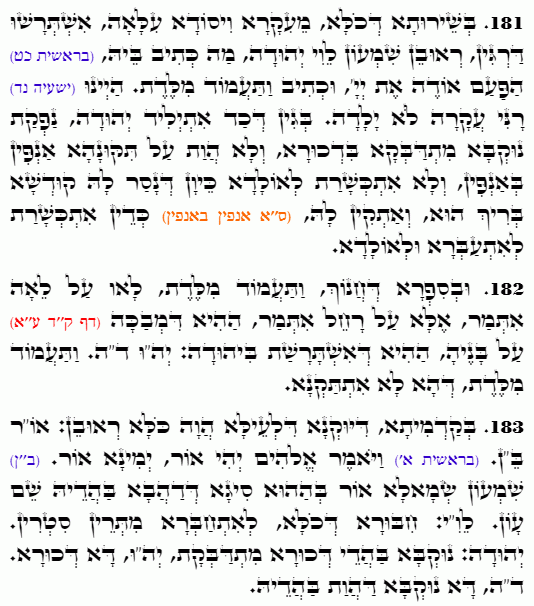
Hebrew translation:
182. וּבְסִפְרוֹ שֶׁל חֲנוֹךְ, וַתַּעֲמֹד מִלֶּדֶת לֹא נֶאֱמַר עַל לֵאָה, אֶלָּא נֶאֱמַר עַל רָחֵל, אוֹתָהּ שֶׁמְּבַכָּה עַל בָּנֶיהָ, אוֹתָהּ שֶׁנִּשְׁרְשָׁה בִּיהוּדָה – יְה”וּ דָ”ה. וַתַּעֲמֹד מִלֶּדֶת, שֶׁהֲרֵי לֹא נִתְקְנָה.
183. בַּתְּחִלָּה דְּיוֹקַן הָעֶלְיוֹן הָיָה הַכֹּל רְאוּבֵן – אוֹ”ר בֵּ”ן. (בראשית א) וַיֹּאמֶר אֱלֹהִים יְהִי אוֹר, יָמִין אוֹר. (בֵּ”ן) שִׁמְעוֹן שְׂמֹאל אוֹר, בְּאוֹתוֹ סִיג שֶׁהַזָּהָב עִמּוֹ – שָׁם עָוֹן. לֵוִי – חִבּוּר שֶׁל הַכֹּל לְהִתְחַבֵּר מִשְּׁנֵי צְדָדִים. יְהוּדָה – נְקֵבָה עִם זָכָר נִדְבֶּקֶת. יְה”וּ – זֶה זָכָר. דָ”ה – זוֹ נְקֵבָה שֶׁהָיְתָה עִמּוֹ.
.
Zohar Mishpatim
Continued from previous DZ
#181
At the beginning of everything, from the supernal primordial root and foundation, the levels were rooted: Reuben, Shimon, Levi, Yehuda — which are Chessed, Gevurah, Tiferet, and Malchut. What is written regarding him? “הַפַּעַם אוֹדֶה אֶת יְהוָה” “This time I will praise the YHVH” (Genesis 29:35). And it is written: “וַתַּעֲמֹד מִלֶּדֶת” “and she stood from bearing” (Genesis 29:35). And this is: “רָנִּי עֲקָרָה לֹא יָלָדָה” “Sing, O barren one who did not bear” (Isaiah 54:1). Because when Yehuda was born, the Nukva emerged — which is Malchut — clinging to the male, which is Zeir Anpin, but they were not in their rectification face to face, and Malchut was not fit to give birth. Once the Holy One, blessed be He, separated her — meaning He divided her from behind the male — and rectified her, then she became fit to conceive and to give birth. As is explained before us.
Notes:
The Zohar reveals the deep kabbalistic structure behind the births of Leah’s first four sons: Reuben (Chessed), Shimon (Gevurah), Levi (Tiferet), and Yehuda (Malchut). These four form the essential “legs of the holy throne” — the foundational sefirot below Binah/Chokhmah. The birth of Yehuda completes this structure, allowing Malchut (the Nukva/feminine aspect) to fully emerge and unite properly with Zeir Anpin (the male aspect).
Prior to this rectification, Malchut was “behind” Zeir Anpin (in a state of back-to-back or incomplete union), rendering her “barren” — unable to receive and give birth fully to lower worlds or souls. Leah’s declaration “This time I will praise the YHVH” and her ceasing to bear reflect the moment Malchut achieves face-to-face union (panim be-panim), becoming capable of true fertility and revelation. The verse “Sing, O barren one” alludes to this transformation from spiritual barrenness to fruitfulness through divine separation and tikkun.
Thus, Yehuda’s birth symbolizes the completion of the lower sefirotic configuration, enabling Malchut to manifest in its rectified state — a key step in the unfolding of divine sovereignty and redemption.
#182
And in the book of Enoch it is written, “וַתַּעֲמֹד מִלֶּדֶת” “and she stood from bearing” (Genesis 29:35) — it is not said concerning Leah, who is the Nukva of Zeir Anpin that is above the chest, but concerning Rachel it is said — that one who weeps for her children, that one who was rooted in Yehuda, who is the Nukva below the chest, which is the letters יה”ו ד”ה. And “וַתַּעֲמֹד מִלֶּדֶת” “and she stood from bearing,” because she had not yet been rectified.
Notes:
The Zohar distinguishes between two aspects (partzufim) of the feminine Nukva in relation to Zeir Anpin: Leah represents the upper Nukva, positioned above the chest (from Da’at/chest upward, associated with higher consciousness and thought), while Rachel represents the lower Nukva, positioned below the chest (the realm of action, speech, and manifestation in the world).
The verse “וַתַּעֲמֹד מִלֶּדֶת” “and she stood from bearing” (Genesis 29:35), which appears after the birth of Yehuda to Leah, is mystically reinterpreted here as applying not to Leah (the upper aspect already in a state of partial union), but to Rachel — the lower Malchut/Nukva, who is “rooted in Yehuda” (symbolizing the Malchut aspect emerging through Yehuda’s tribe and line). Rachel, as the weeping mother (“Rachel weeping for her children,” Jeremiah 31:15), embodies the unrectified or incomplete state of Malchut below the chest, where full fertility and revelation are blocked until proper tikkun occurs.
The letters יה”ו ד”ה allude to a specific configuration of the divine name (likely יהוה with emphasis on the lower letters or a variant spelling hinting at the lower worlds), underscoring that this lower Nukva remains “barren” in her capacity to fully birth and sustain until divine rectification separates, aligns, and elevates her to face-to-face union with Zeir Anpin. This teaches that true spiritual fruitfulness in the lower realms depends on completing the rectification process initiated at higher levels, with Rachel’s state symbolizing the ongoing exile and yearning of Malchut until full redemption.
#183
At the beginning, the form above was everything — even Rachel ascended and was above the chest. Reuben is the letters אור בן (“light, son”), which is the secret of “וַיֹּאמֶר אֱלֹהִים יְהִי אוֹר” “And God said, Let there be light” (Genesis 1:3) — which is the right side, meaning Chessed of Zeir Anpin. Shimon is the left side, and he is light together with that of gold, for Shimon is the letters שם עון (“name of iniquity”) — which is the left, Gevurah of Zeir Anpin. Levi is the connection of everything, to join the two sides, for he is the middle line that connects right with left, and he is Tiferet of Zeir Anpin. And after the Chesed-Gevurah-Tiferet of Zeir Anpin that is above the chest emerged, the Nukva emerged, called Rachel. And this is Yehuda, who is the Nukva. And the Nukva cleaves to the male, which is Chesed-Gevurah-Tiferet of Zeir Anpin: יה”ו — this is the male, meaning Chesed-Gevurah-Tiferet; ד”ה — this is the Nukva, Rachel, who was with him, with the male.
Notes:
The Zohar describes the initial configuration of the sefirot within Zeir Anpin and the emergence of the Nukva (Malchut/Rachel) as part of a primordial unity above the chest (the higher, more unified realm of thought and supernal emotion).
Reuben (Chesed/right) corresponds to pure divine light (“Let there be light”), emerging as the “son of light.” Shimon (Gevurah/left) carries an admixture of impurity within the gold — hinted at by שם עון (“name of iniquity”), reflecting the judgmental, constrictive power that includes a residue of severity. Levi (Tiferet/middle) serves as the harmonizing central column, binding right and left into balance.
These three (Chessed-Gevurah-Tiferet, abbreviated חג”ת) constitute the “male” aspect of Zeir Anpin above the chest. Only afterward does the Nukva — Rachel — emerge and cleave to this male structure. Yehuda symbolizes this Nukva/Malchut in her initial attachment to Zeir Anpin. The breakdown יה”ו (the male: the upper three letters of the Name associated with חג”ת) and ד”ה (the Nukva: the lower two letters) illustrates their intimate union at this stage: Rachel was “with him,” fully adhered to the male aspect in a state of preliminary oneness before any separation or further descent occurred.
This passage emphasizes that Malchut/Rachel begins in elevated unity with Zeir Anpin (above the chest, in a state of greater integration), and only through subsequent processes (as described earlier) does she become positioned below the chest — requiring rectification to achieve full face-to-face fertility and revelation in the lower worlds. The birth sequence of the sons thus mirrors the unfolding and stabilization of the divine structure leading toward kingship.
{||}

 Join Zohar Sparks - Telegram (Not a chat group)
 Join on WhatsApp (Not a chat group)
 Join on Signal (Chat is available only in this group)