
 Previous: Vayikra
Daily Zohar # 5125 – Vayikra – Like the palm tree
Daily Zohar 5125
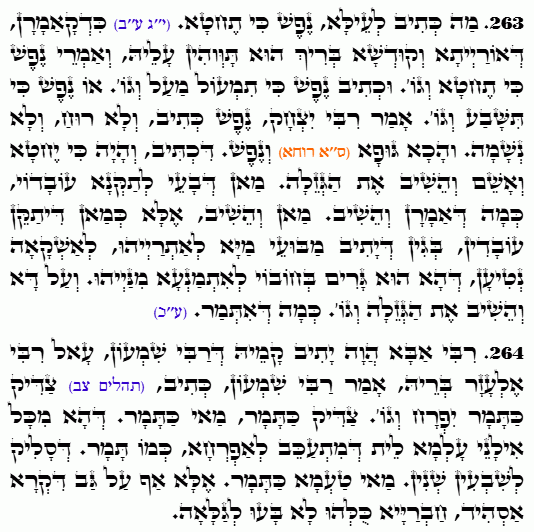
Hebrew translation:
264. רַבִּי אַבָּא הָיָה יוֹשֵׁב לִפְנֵי רַבִּי שִׁמְעוֹן. נִכְנָס רַבִּי אֶלְעָזָר בְּנוֹ. אָמַר רַבִּי שִׁמְעוֹן, כָתוּב (תהלים צב) צַדִּיק כַּתָּמָר יִפְרָח וְגוֹ’. צַדִּיק כַּתָּמָר, מַה זֶּה כַּתָּמָר? שֶׁהֲרֵי מִכָּל הָאִילָנוֹת שֶׁל הָעוֹלָם, אֵין מִי שֶׁמִּתְעַכֵּב לִפְרֹחַ כְּמוֹ תָמָר שֶׁעוֹלֶה לְשִׁבְעִים שָׁנִים. מָה הַטַּעַם כַּתָּמָר? אֶלָּא אַף עַל גַּב שֶׁהַכָּתוּב מֵעִיד, הַחֲבֵרִים כֻּלָּם אֵין רוֹצִים לְגַלּוֹת.
.
Zohar Vayikra
Continued from previous DZ
#263
What is written above? “נֶפֶשׁ כִּי תֶחֱטָא” “If a soul sins” (Leviticus 5:21). And it is as we have said, that the Torah and the Holy One, blessed be He, are astonished at her and say “נֶפֶשׁ כִּי תֶחֱטָא” etc. (as explained above, #209). And it is written: “וְנֶפֶשׁ כִּי תִמְעֹל מַעַל” “And if a soul commits a trespass” etc. (Leviticus 5:15), or “נֶפֶשׁ כִּי תִשָּׁבַע” “Or if a soul swears” etc. (Leviticus 5:4).
Rabbi Yitzchak said: “נֶפֶשׁ” is written in all these cases, and not “ruach” or “neshamah.” For the ruach and the neshamah do not sin, but they are damaged because of the soul (nefesh) that sins.
And here, in the case of robbery, it concerns the body and the nefesh, as it is written: “וְהָיָה כִי יֶחֱטָא וְאָשֵׁם וְהֵשִׁיב אֶת הַגְּזֵלָה” “And it shall be, when he sins and becomes guilty, that he shall restore the stolen item” (Leviticus 5:23).
Concerning one who comes to repair his deeds, it is said “וְהֵשִׁיב” “and he shall restore,” as we have said (in section 251). “וְהֵשִׁיב” — what does “and he shall restore” mean? It is like one who repairs his deeds so that the springs of water — which are the supernal abundance — will return to their place, to water the plantings, which are the sefirot. For through his sins, he caused the abundance to be withheld from them. And concerning this, it is said, “and he shall restore the stolen item” etc., as we have said.
Notes:
The Torah repeatedly uses the word “נֶפֶשׁ” (nefesh/soul) when speaking of sin, because it is specifically the lower nefesh (together with the body) that sins and damages the higher levels of ruach and neshamah. In the case of robbery, the rectification requires active restitution (“וְהֵשִׁיב”). This act of voluntary return is not merely repaying money — it is a spiritual repair. By correcting his deeds, the person causes the supernal flow (the “springs of water”) to return to its proper place so it can once again water all the sefirot (the “plantings”). Sin blocks the divine abundance; true teshuvah and restitution reopen the channels, allowing blessing to flow back into the entire sefirot structure and the world.
#264
Rabbi Abba was sitting before Rabbi Shimon. Rabbi Elazar, his son, entered. Rabbi Shimon said: It is written, ‘צַדִּיק כַּתָּמָר יִפְרָח” “The righteous shall flourish like the palm tree” etc. (Psalms 92:13). “A righteous one like the palm tree” — what does “like the palm tree” mean?
And he answers: For among all the trees of the world, none delays in flowering like the palm tree, for it takes seventy years to rise. And what is the reason that the tzaddik is compared to the palm tree? Although the verse testifies to this, none of the study friends wishes to reveal it.
Notes:
Rabbi Shimon begins to expound the verse “The righteous shall flourish like the palm tree” (Psalms 92:13). He notes that the palm tree is unique among trees because it takes a very long time — seventy years — before it begins to flower and bear fruit. The comparison of the tzaddik to a palm tree hints at a deep, concealed mystery. Although the verse itself points to this likeness, the companions (the circle of Rabbi Shimon) are reluctant to reveal the full inner meaning. This sets the stage for a profound teaching about the hidden nature and long maturation process of the true tzaddik, whose spiritual “flowering” and fruitfulness often require decades of inner work and divine timing before they become visible to the world. The reluctance to explain further suggests that the teaching touches on lofty, esoteric secrets concerning the soul of the tzaddik and its connection to supernal structures.
{||}

 Join Zohar Sparks - Telegram (Not a chat group)
 Join on WhatsApp (Not a chat group)
 Join on Signal (Chat is available only in this group)