
 Previous: Vayikra
Daily Zohar # 5177 – Vayikra – Come closer for Peace
Daily Zohar 5177
Hebrew translation:
357. אָמַר אֶחָד מֵהַסּוֹחֲרִים: יֹאמְרוּ לָנוּ בַּעֲלֵי הַתּוֹרָה אֶת הַפָּסוּק הַזֶּה, אוֹדְךָ לְעוֹלָם כִּי עָשִׂיתָ וַאֲקַוֶּה וְגוֹ’. כִּי עָשִׂיתָ, מַה זֶּה כִּי עָשִׂיתָ, וְלֹא כָתוּב מָה? וְכָתוּב כִּי טוֹב נֶגֶד חֲסִידֶיךָ, וְכִי לְגַבֵּי אַחֵר אֵינוֹ כִּי טוֹב?
.
Zohar Vayikra
Continued from previous DZ
#356
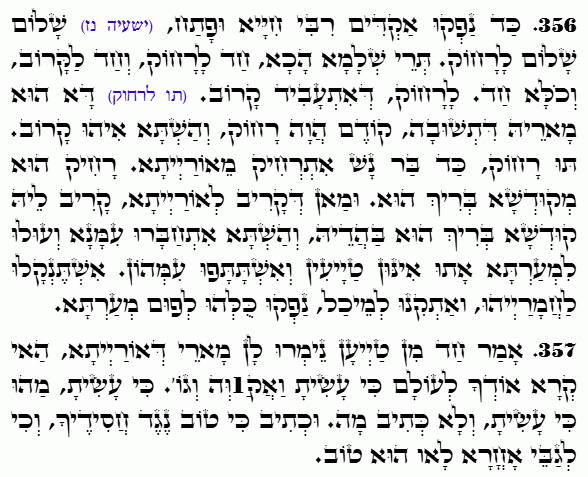
When they came out, Rabbi Chiya preceded and opened: “שָׁלוֹם שָׁלוֹם לָרָחוֹק” “Peace, peace to the far off” (Isaiah 57:19). Two times “peace” here — one to the far off and one to the near, and it is all one — that is, to the far off who has become near, for this is the one who did teshuvah, who was previously far and now is near. Moreover, “far off” means: when a person distances himself from the Torah, he is far from the Holy One, blessed be He, and whoever is close to the Torah, the Holy One, blessed be He, draws him near to Himself.
And he said to the merchants: And now, join with us and come into the cave. These merchants came and joined with them. They unloaded the burdens from the donkeys and gave them food to eat, and they all went out to the opening of the cave.
#357
One of the merchants said: Let the masters of Torah tell us this verse: “אוֹדְךָ לְעוֹלָם כִּי עָשִׂיתָ וָאֲקַוֶּה” etc. “I will give thanks to You forever, for You have done it, and I will wait” etc. (Psalms 52:11). “For You have done it” — what is “for You have done it,” that it is not written, “what”? And it is written: “כִּי טוֹב נֶגֶד חֲסִידֶיךָ” “for it is good in the sight of Your pious ones” (Psalms 52:11). And is it not good for others?
Notes:
Rabbi Chiya greets the merchants with “Peace, peace to the far off,” interpreting the double “peace” as encompassing both the completely righteous (the near) and the masters of teshuvah (those who were far but have drawn near). He invites them to join, thereby showing the tzaddikim’s open and welcoming nature.
One merchant repeats the question that had been troubling them about Psalm 52:11: why does the verse say “for You have done it” without specifying the act, and why does it emphasize that it is good “in the sight of Your pious ones” when God is good to all? This sincere inquiry becomes the catalyst for deeper Torah teaching. The story illustrates how divine providence arranges encounters between merchants seeking truth and sages who can provide mystical insight, turning a moment of danger into one of spiritual elevation.
{||}

 Join Zohar Sparks - Telegram (Not a chat group)
 Join on WhatsApp (Not a chat group)
 Join on Signal (Chat is available only in this group)