
 Previous: Beresheet
Daily Zohar # 5234 – Beresheet – And He commanded
Daily Zohar 5234
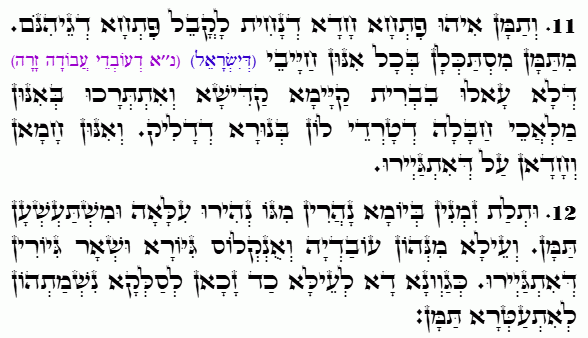
Hebrew translation:
432. וַיְצַו ה’ אֱלֹהִים. הֲרֵי שָׁנִינוּ, אֵין צַו אֶלָּא עֲבוֹדָה זָרָה. ה’ – זוֹ בִּרְכַּת הַשֵּׁם. אֱלֹהִים – אֵלּוּ הַדַּיָּנִים. עַל הָאָדָם – זוֹ שְׁפִיכַת דָּמִים. לֵאמֹר – זוֹ גִּלּוּי עֲרָיוֹת. מִכֹּל עֵץ הַגָּן – וְלֹא גָזֵל. אָכֹל תֹּאכֵל – וְלֹא אֵבָר מִן הַחַי, וְיָפֶה.
.
Zohar Beresheet
Continued from previous DZ
#431
We have learned that the plantings, which are Zeir Anpin and Nukva, were small, like the horns of locusts, and their light was thin, so they did not shine. Once they were planted in another place, that is, they rose to Abba and Imma and were formed, their lights grew great, and they were called cedars of Lebanon. And likewise Adam and Eve, before they were planted in another place, that is, in Zeir Anpin and Nukva, did not grow in light and certainly did not give forth a good fragrance. They were uprooted from their place and planted above, in Zeir Anpin and Nukva, and were properly fixed.
Notes:
Before their rectification, both the upper plantings (Zeir Anpin and Nukva) and the lower plantings (Adam and Eve) were small and dim. Only after they were uprooted and planted in a higher place — Zeir Anpin and Nukva into Abba and Imma, and Adam and Eve into Zeir Anpin and Nukva — did their lights expand and become properly established.
#432
“וַיְצַו יְהוָה אֱלֹהִים” “And YHVH God commanded…” (Genesis 2:16). We have learned that every “command” (צו, tzav) refers to idolatry. That is, wherever the word “צו “command) appears, it alludes to the prohibition of idolatry. Here, too, the word “and He commanded” indicates that He forbade him from idolatry. And he interprets the verse concerning the seven commandments that Adam the first man was commanded here: “And He commanded” — this is idolatry; “YHVH” — this is the prohibition of cursing the Name; “God” — these are the judges who must judge righteously; “upon the man” — this is the prohibition of bloodshed; “saying” — this is the prohibition of illicit relations; “from every tree of the garden” — and not robbery, and so on. And the explanation is good and true. However, there is still more to interpret: “from every tree of the garden you may freely eat” indicates that He permitted him everything, even the Tree of Knowledge, only that he should eat them in unity — that is, that the Tree of Knowledge should be in unity with the other trees of the garden, as will be explained before us.
Notes:
The word “ויצו” “commanded” alludes to the prohibition of idolatry and, more broadly, to the seven Noahide laws given to Adam. An additional reading is that Adam was permitted to eat from every tree, including the Tree of Knowledge, provided he did so in a state of unity with all the other trees of the garden.
}||{

 Join Zohar Sparks - Telegram (Not a chat group)
 Join on WhatsApp (Not a chat group)
 Join on Signal (Chat is available only in this group)