
 Previous: Beresheet
Daily Zohar # 5233 – Beresheet – She supports him
Daily Zohar 5233
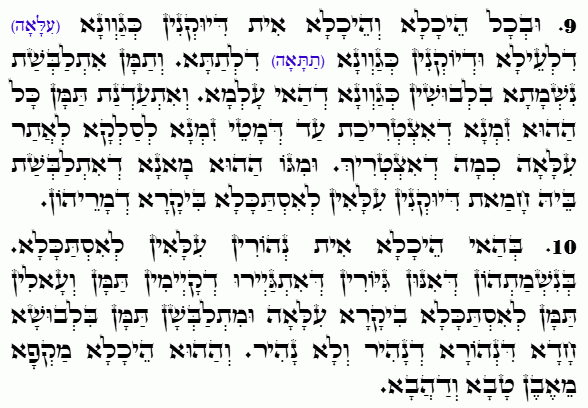
Hebrew translation:
430. וְאָמַר רַבִּי אַבָּא, מִנַּיִן לָנוּ שֶׁאָדָם וְחַוָּה הָיוּ נְטוּעִים? שֶׁכָּתוּב (ישעיה ס) נֵצֶר מַטָּעַי מַעֲשֵׂה יָדַי לְהִתְפָּאֵר. דַּוְקָא מַעֲשֵׂה יָדַי, שֶׁלֹּא הִשְׁתַּדְּלוּ בָהֶם בְּרִיּוֹת אֲחֵרוֹת, וְכָתוּב (שם יז) בְּיוֹם נִטְעֵךְ תְּשַׂגְשֵׂגִי. שֶׁבְּאוֹתוֹ יוֹם שֶׁנִּנְטְעוּ בָּעוֹלָם, סָרְחוּ.
.
Zohar Beresheet
Continued from previous DZ
#429
From here onward, the letter “ס” Samekh is written in the portion. And he asks, What is this Samekh? And he says that it is the Samekh in the verse “וַיִּסְגֹּר בָּשָׂר תַּחְתֶּנָּה” “and He closed up the flesh in its place” (Genesis 2:21). That is, from then onward Eve was made in the aspect of Samekh (also means support). And at first Eve was attached to his side, and they were attached to one another. And the Holy One, blessed be He, certainly separated them, as it is written “וַיִּקַּח אַחַת מִצַּלְעֹתָיו” “and He took one of his ribs” (Genesis 2:21), and planted them in another place, that is in Abba and Imma, as it is written “וַיִּבֶן יְהוָה אֱלֹהִים אֶת הַצֵּלָע” “And YHVH God built the rib” (Genesis 2:22). “YHVH God” is Abba and Imma. That is, Zeir Anpin and Nukva clothed themselves in Abba and Imma, became like them, and raised Eve to them and built her into a complete partzuf, face to face. Adam and Eve returned to being two partzufim face to face, and through this they were established in completeness. And with this it is explained that before the Samekh in the verse “and He closed up the flesh in its place,” Eve was not in the aspect of support to Adam, which means two partzufim face to face, but rather two faces side by side. Only after the Holy One, blessed be He, separated Eve from Adam in the verse “and He took one of his ribs,” from then onward Eve was made in the secret of Samekh, for they returned face to face. Therefore the Samekh was written immediately after the separation, that is, in the verse, “and He closed up the flesh in its place.” In this manner the upper worlds also support — that is Zeir Anpin and Nukva: the Holy One, blessed be He, uprooted them and planted them in another place. At first they were two faces, and afterward the Holy One, blessed be He, uprooted them, which are the upper Abba and Imma. And they raised the Nukva to them and built her, and Zeir Anpin and Nukva were established in complete state, that is face to face.
#430
And Rabbi Abba said, From where do we know that Adam and Eve are called plantings? It is from what is written “נֵצֶר מַטָּעַי מַעֲשֵׂה יָדַי לְהִתְפָּאֵר” “the branch of My planting, the work of My hands, that I may be glorified” (Isaiah 60:21). “The work of My hands” is exact, to indicate that the intention is about Adam and Eve, for no other creatures dealt with them, only the Holy One, blessed be He, alone. And those the verse calls “the branch of My planting,” so Adam and Eve are called plantings. And it is written “בְּיוֹם נִטְעֵךְ תְּשַׂגְשֵׂגִי” “On the day you were planted you made it grow” (Isaiah 17:11), which means that on the day they were planted in the world they sinned. So the verse speaks of Adam, the first man, and calls them a planting, for it says “on the day you were planted…”
Notes:
The appearance of the letter Samekh marks the moment when Eve was fully separated and reunited with Adam face to face, becoming true support (סמיכה, semikhah). The same process occurred above with Zeir Anpin and Nukva: they were separated from their side-by-side state, raised into Abba and Imma, and rebuilt face-to-face. Adam and Eve are called “plantings” because they were formed solely by the hands of the Holy One, blessed be He, and were planted in the world on the very day they sinned.
{||}

 Join Zohar Sparks - Telegram (Not a chat group)
 Join on WhatsApp (Not a chat group)
 Join on Signal (Chat is available only in this group)