
 Previous: Shemot
Daily Zohar # 5044 – Shemot – The Shabbat of the seventh millennium
Daily Zohar 5044
Hebrew translation:
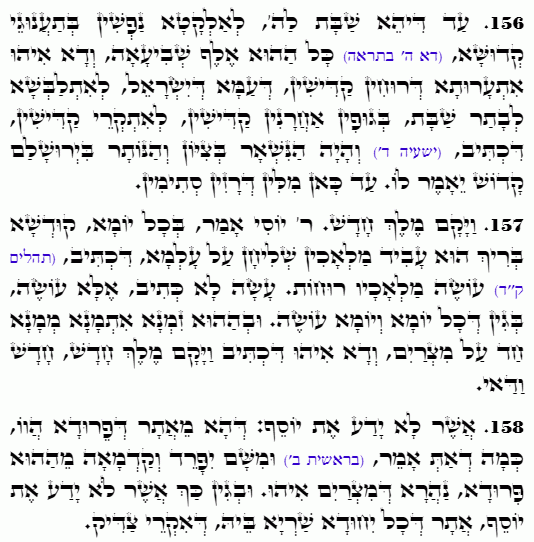
158. אֲשֶׁר לֹא יָדַע אֶת יוֹסֵף, שֶׁהֲרֵי מִמָּקוֹם שֶׁל פֵּרוּד הָיוּ, כְּמוֹ שֶׁנֶּאֱמַר (בראשית ב) וּמִשָּׁם יִפָּרֵד. וְהָרִאשׁוֹן מֵאוֹתוֹ הַפֵּרוּד הוּא נְהַר מִצְרַיִם, וְלָכֵן אֲשֶׁר לֹא יָדַע אֶת יוֹסֵף, מָקוֹם שֶׁכָּל הַיִּחוּד שׁוֹרֶה בּוֹ, שֶׁנִּקְרָא צַדִּיק.
.
Zohar Shemot
Continued from previous DZ
#156
Until it will be a Shabbat to YHVH, to gather souls in the delight of holiness, that is, to draw additional souls in the secret of the upper union (zivug). In the seventh millennium, which is all Shabbat, and this is the arousal of the holy spirits of the people of Israel to dress after the Shabbat, that is, after the seventh millennium, in other holy bodies, to be called holy. As it is written: “וְהָיָה הַנִּשְׁאָר בְּצִיּוֹן וְהַנּוֹתָר בִּירוּשָׁלִַם קָדוֹשׁ יֵאָמֶר לוֹ”, “And the remnant in Zion and the survivor in Jerusalem shall be called holy” (Isaiah 4:3).
Up to here are the words of hidden secrets.
Notes:
This Zohar passage from Shemot discusses the seventh millennium as a complete Shabbat, when additional holy souls are drawn through the supernal union. The holy spirits of Israel will then be clothed in new holy bodies, fulfilling “וְהָיָה הַנִּשְׁאָר בְּצִיּוֹן” (Isaiah 4:3), called holy in the final Redemption.
#157
Rabbi Yossi says: Every day the Holy One, blessed be He, makes angels as emissaries to the world, as it is written: “עֹשֶׂה מַלְאָכָיו רוּחוֹת”, “Who makes His angels winds” (Psalms 104:4). It does not say “עָשָׂה” (asah, made), but “עֹשֶׂה” (oseh, makes), in the present tense, because every single day He makes them.
And at that time, an angel was appointed as overseer over Egypt. And this is what is written: “וַיָּקָם מֶלֶךְ חָדָשׁ”, “And a new king arose” (Exodus 1:8). New, indeed, for he is the appointee whom the Holy One, blessed be He, made now.
Notes:
God creates angels daily (עֹשֶׂה), and the “מֶלֶךְ חָדָשׁ” “new king” is a fresh appointee over Egypt.
#158
“אֲשֶׁר לֹא יָדַע אֶת יוֹסֵף”, “Who knew not Joseph” (Exodus 1:8). For the appointee was from the place of separation, as it is said: “וּמִשָּׁם יִפָּרֵד”, “And from there it was divided” (Genesis 2:10), and became four heads. And the first from that separation was the river of Egypt, as it is written: “וְשֵׁם הָאֶחָד פִּישׁוֹן”, “And the name of the first is Pishon” (Genesis 2:11), which is the river of Egypt. And for this reason, he did not know Joseph, who is the place where all unity dwells, called Tzaddik, for Joseph is the secret of Yessod, called Tzaddik, in which all the unities of Zeir Anpin and Nukva are made. And the separation (פֵּרוּד) does not want to know the unity.
Notes:
The new king (appointee from separation, Pishon/Egypt) rejects Joseph (Yessod, Tzaddik), the source of unity between Zeir Anpin and Nukva. Separation opposes unity, reflecting Egypt’s dominion rooted in division.
{||}

 Join Zohar Sparks - Telegram (Not a chat group)
 Join on WhatsApp (Not a chat group)
 Join on Signal (Chat is available only in this group)