
 Previous: Mishpatim
Daily Zohar # 5079 – Mishpatim – Yehuda, your brothers shall praise you
Daily Zohar 5079
Hebrew translation:
185. צֵא זָקֵן מִתּוֹךְ הַתְּהוֹמוֹת, אַל תִּפְחַד, כַּמָּה סְפִינוֹת מְזֻמָּנוֹת לְךָ בְּשָׁעָה שֶׁתָּשׁוּט בַּיָּם כְּדֵי לָנוּחַ בָּהֶן. בָּכָה כְּמוֹ מִקֹּדֶם וְאָמַר, רִבּוֹן הָעוֹלָם, אוּלַי יֹאמְרוּ הַמַּחֲנוֹת הָעֶלְיוֹנִים שֶׁאֲנִי זָקֵן וּבוֹכֶה כְּתִינוֹק. גָּלוּי לְפָנֶיךָ שֶׁעַל כְּבוֹדְךָ אֲנִי עוֹשֶׂה, וְלֹא עָשִׂיתִי לִכְבוֹדִי, שֶׁהֲרֵי בַּתְּחִלָּה הָיָה לִי לְהִשָּׁמֵר שֶׁלֹּא אֶכָּנֵס לַיָּם הַגָּדוֹל, וְעַכְשָׁו כֵּיוָן שֶׁאֲנִי בּוֹ, יֵשׁ לִי לְשׁוֹטֵט בְּכָל הַצְּדָדִים וְלָצֵאת מִמֶּנּוּ.
186. יְהוּדָה אַתָּה יוֹדוּךָ אַחֶיךָ, (כֻּלָּם מוֹדִים עַל הַשֵּׁם הַזֶּה) הַיְנוּ מַה שֶּׁאָנוּ אוֹמְרִים בָּרוּךְ אַתָּה, הוּא בָּרוּךְ וְהִיא אַתָּה. לְכָל בָּנָיו לֹא אָמַר יַעֲקֹב אַתָּה, אֶלָּא לְמָקוֹם שֶׁהִצְטָרֵךְ. זֶהוּ אַתָּה.
.
Zohar Mishpatim
Continued from previous DZ
#184
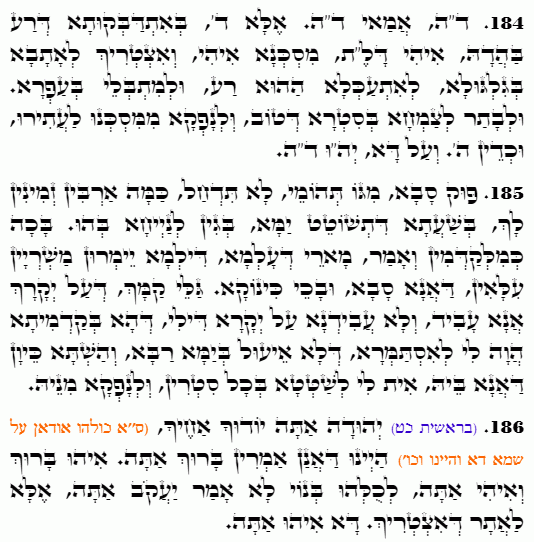
He asks: The Nukva is alluded to in the letters ד”ה — why ד”ה?
And he answers: Rather, ד’ is called the Nukva at the time when evil cleaves to her — that is, at the time when she is in the aspect of the left side only, and she is clinging behind the male. She is דל”ת, whose meaning is that she is poor(דלות), and she needs to return through gilgul — meaning the reincarnations from Yehuda until King David — to eradicate that evil, and to wallow in the dust and afterward to sprout on the side of good; that is, through the rebuilding of Aba and Ima anew, in the secret of the verse “וַיִּבֶן יְהוָה אֱלֹהִים אֶת הַצֵּלָע” “And YHVH God built the rib” etc. (Genesis 2:22), and to go out from poverty to wealth. And then she is called ה’.
And therefore Yehuda is the letters יה”ו ד”ה — where יה”ו are Chesed-Gevurah-Tiferet of the male, ד’ ה’ are the Nukva in her two states mentioned above, which cleave together with the male.
Notes:
The Zohar explains the profound symbolism of the letters ד”ה (the final two letters of the Name יהוה) as representing the Nukva/Malchut in her dual and evolving states.
When Malchut is called ד’ (dalet), she embodies the aspect of poverty and constriction: attached only to the left side (Gevurah/judgment), clinging “behind” the male (Zeir Anpin) in a back-to-back or incomplete union, with the residue of evil still cleaving to her. This state requires rectification through gilgul — a chain of reincarnations beginning with Yehuda and culminating in David ha-Melech — whose purpose is to purify and eradicate that evil admixture, causing Malchut to “wallow in the dust” (humiliation and descent) before sprouting anew on the side of good.
This process involves the renewed building of Aba (Chokhmah) and Ima (Binah) — the supernal parents — to elevate and reconstruct Malchut, as alluded in “וַיִּבֶן יְהוָה אֱלֹהִים אֶת הַצֵּלָע אֲשֶׁר־לָקַח מִן־הָאָדָם לְאִשָּׁה” “And YHVH God built the rib that He had taken from the man into a woman” (Genesis 2:22). Through this divine “building,” Malchut transitions from poverty (dalet) to richness and completion, at which point she is called ה’ (full hei) — the revealed, fertile, face-to-face aspect capable of true union with Malchut.
Yehuda himself encodes this entire dynamic: יה”ו (the upper three letters: Chessed-Gevurah-Tiferet of the male/Zeir Anpin) joined to ד”ה (the Nukva in her two phases: the impoverished ד’ and the rectified ה’). The name Yehuda thus contains the secret of Malchut’s rectification journey — from attachment to evil and behindness (אחוריים), through generations of purification and rebuilding, to full alignment with the male and the manifestation of divine sovereignty in the world. This underscores that true elevation of Malchut arises only after deep cleansing, humility, and supernal reconstruction across time.
#185
He said to himself: “Come out, old man, from within the abysses — do not fear. How many ships are prepared for you in the hour when you sail on the sea, so that you may rest in them.”
He wept as at the beginning, and said: “Master of the world, perhaps the camps of the supernal ones will say that I am an old man and I weep like a child. It is revealed before You that for Your honor I do this, and I do not do it for my own honor — for at the beginning it was incumbent upon me to guard myself from entering the Great Sea, and now that I am within it, it is incumbent upon me to sail in all directions and to emerge from it.”
Notes:
This passage continues the deeply personal and symbolic introspection of the “old man” (הסבא , the sage who has plunged into the profound mysteries of Torah and Kabbalah). The “abysses” (תהומות tehomot) and the “Great Sea” ״יָּם הַגָּדוֹל״ represent the boundless depths of divine wisdom — Chokhmah or the supernal secrets — where the intellect risks being overwhelmed or lost.
The old man receives inner encouragement to ascend from these depths without fear, with “ships” symbolizing protective vessels of spiritual support, structured teachings, or divine mercies prepared to sustain him during the perilous voyage and allow moments of rest amid the journey.
Yet he weeps again, expressing humility and concern for his emotional vulnerability. He justifies his tears: they stem not from weakness or self-pity, but purely from zeal for God’s honor (kavod Shamayim). His initial caution — to avoid entering the Great Sea recklessly — was proper; but once committed and immersed in these depths, retreat is impossible. The only path forward is active engagement: to “sail in all directions” (to explore and integrate every aspect of the mysteries thoroughly) and ultimately to emerge transformed and elevated.
This teaches a core Zohar principle for the mystic: entry into the deepest secrets demands irreversible commitment. What begins as potential danger becomes an obligation to traverse fully, with humility, courage, and single-minded devotion to divine glory rather than personal prestige. The weeping reflects authentic awe and responsibility, not childishness — and it is precisely through such inner struggle and ascent that the sage completes his rectification and emerges bearing fruit for the world.
#186
“Yehuda, your brothers shall praise you” (Genesis 49:8) — this is what we say: “Blessed are You” — He is blessed when Yessod of Zeir Anpin bestows Chassadim upon Malchut; then He is called “blessed,ברוך” and she is called “You,אתה” And Malchut is called “You.” For the name “You” (Atah) alludes to Chassadim, in the secret of the verse “אַתָּה כֹהֵן” “You are a priest” (Psalms 110:4), as explained before us.
To all the [other] sons, Yaakov did not say “You,” but only to the place that requires it. For Malchut is drawn from the left side, where Chokhmah shines without Chassadim, and she needs the name “You,” which is Chassadim, to clothe the Chokhmah within it. For without Chassadim, Chokhmah does not shine, and it is in the secret of darkness. This is what he said to him: “Yehuda, You.”
Notes:
The Zohar uncovers the profound kabbalistic meaning embedded in Yaakov’s blessing to Yehuda: “יהודה אתה יודוך אחיך” “Yehuda, your brothers shall praise you” (Genesis 49:8), focusing especially on the word “אתה” (“You”).
This “אתה” is not mere address but a divine name signifying the flow of Chassadim from Yessod of Zeir Anpin (the channel of transmission) into Malchut. When this bestowal occurs, Zeir Anpin is called “ברוך” (“blessed,” the giver of blessing), while Malchut is called “אתה” (“You,” the recipient who receives and manifests the blessing). The prayer “ברוך אתה” (“Blessed are You”) thus encodes this union: the masculine aspect becomes “blessed” through giving, and the feminine aspect (Malchut) is addressed as “You” — the vessel that actualizes divine presence in the world.
Yehuda, as the root of Malchut, uniquely receives this address “אתה” because Malchut originates from the left side (Gevurah), where supernal Chokhmah (wisdom) shines in its raw, unmitigated form — pure potential light without the warmth and expansion of Chesed. In this state, Chokhmah remains concealed, akin to “darkness” or unilluminated potential. Only when clothed in Chassadim (the “אתה”) does Chokhmah become revealed and illuminating.
Yaakov therefore reserves the word “אתה” exclusively for Yehuda/Malchut — the precise location that requires this infusion of Chessed to complete her rectification, transform potential wisdom into actual revelation, and enable Malchut to shine forth. This teaches that true sovereignty and divine manifestation in the lower worlds depend on the harmonious clothing of Chokhmah (left-side severity/wisdom) with Chessed (right-side expansion/mercy), achieved through the channel of Yessod and embodied in the tribe of Yehuda.
Friday would be a good day to make a ** Donation, especially if you didn’t donate in the past week. Giving on Friday, which is an aspect of Yessod, expands the vessel for the Light and honor of Shabbat.
** Your donation doesn’t have to be given to the same place every week. You can alternate or split your donation among those who benefit you spiritually.
Support – Ohr HaCarmel Yeshiva
Tap here: Ohr HaCarmel Donation Page to make your contribution and make a spiritual connection to Israel.
The Yeshiva Ohr HaCarmel (which means the Light of the Carmel) is on top of Mount Carmel, where the prophet Elijah’s prayers were answered.

 Join Zohar Sparks - Telegram (Not a chat group)
 Join on WhatsApp (Not a chat group)
 Join on Signal (Chat is available only in this group)