
 Previous: Terumah
Daily Zohar # 5088 – Terumah – And night to night declares knowledge
Daily Zohar 5088
Hebrew translation:
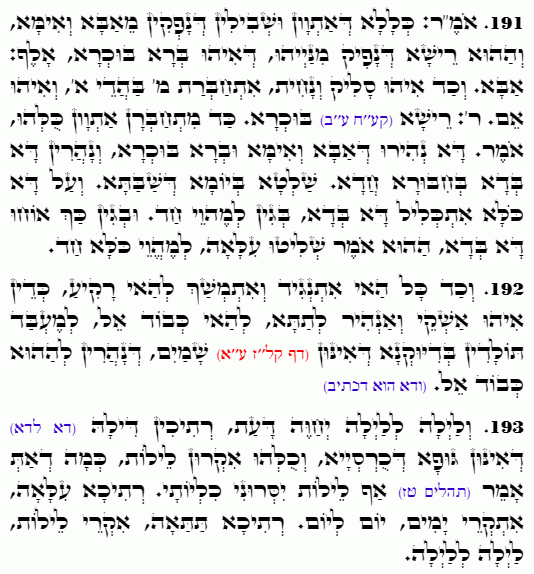
192. וּכְשֶׁכָּל זֶה נִשְׁפָּע וְנִמְשָׁךְ לָרָקִיעַ הַזֶּה, אָז הוּא מַשְׁקֶה וּמֵאִיר לְמַטָּה, לִכְבוֹד אֵל הַזֶּה, לַעֲשׂוֹת תּוֹלָדוֹת בִּדְיוֹקַן אוֹתָם הַשָּׁמַיִם שֶׁמְּאִירִים לְאוֹתוֹ כְּבוֹד אֵל. (וְזֶהוּ שֶׁכָּתוּב)
193. וְלַיְלָה לְּלַיְלָה יְחַוֶּה דָּעַת – מַרְכְּבוֹתֶיהָ (זוֹ לְזוֹ) שֶׁהֵן גּוּף הַכִּסֵּא, וְכֻלָּן נִקְרָאוֹת לֵילוֹת, כְּמוֹ שֶׁנֶּאֱמַר (תהלים טז) אַף לֵילוֹת יִסְּרוּנִי כִלְיוֹתָי. מֶרְכָּבָה עֶלְיוֹנָה נִקְרֵאת יָמִים, יוֹם לְיוֹם. מֶרְכָּבָה תַּחְתּוֹנָה נִקְרֵאת לֵילוֹת, לַיְלָה לְּלַיְלָה.
.
Zohar Terumah
Continued from previous DZ
#191
“אֹמֶר” that is in the verse “יום ליום יַבִּיעַ אֹמֶר” — its meaning is the inclusion of the letters and the paths: the illuminations of Ima are called letters, and the illuminations of Aba are called paths. They issue from Aba and Ima, and the head of that — meaning the upper three (ג”ר) that are called “ראש” “head,” issuing from them, which is the firstborn son, meaning Zeir Anpin, who is called the firstborn son.
The א of אמר alludes to Aba. And when he ascends and descends — meaning when he emanates the katnut (smallness state) of Ima, whose light ascends from below to above, and the gadlut (great state) of Ima, whose light descends from above to below — then the מ of אמר, which is Ima, unites with the א.
The ר of אמר alludes to the firstborn son, which is Zeir Anpin. When all these letters unite, they become אמר — which is the light of Aba and Ima and the firstborn son — and they illuminate one another in one union. And they rule on the day of Shabbat.
And therefore everything is included one in the other in order to be one, for Zeir Anpin ascends and clothes Aba and Ima, and because of this they hasten to bestow one upon the other — these three letters of אמר, which are the supernal dominion — so that everything may be one.
Meaning: Because the illumination of Chokhmah is drawn from Ima to Zeir Anpin, therefore it must be in haste so that the klipot do not suckle from it. And this is the way in every place where the illumination of Chokhmah is drawn. And this is what it says: “And because of this, this one with that one, etc., to be one.” For if the klipot suckle even a little, they are no longer one, God forbid. For “one” means there is no partnership with it from the other side.
Notes:
The Zohar interprets “אֹמֶר” in Psalms 19:3 as the unified light of Aba (א), Ima (מ), and Zeir Anpin (ר — the firstborn son), achieved through dynamic ascent (katnut) and descent (gadlut) of Ima’s light. This union, hastened to prevent the klipot from drawing sustenance, allows the three letters to rule on Shabbat day as one complete dominion. The haste protects the pure transmission of Chokhmah from Ima to Zeir Anpin, ensuring absolute oneness without any admixture or partnership from the other side (the klipot), which is the essence of true divine unity on Shabbat.
#192
And when all this is drawn and flows to this firmament — which is Yessod of Zeir Anpin — then it irrigates and illuminates below, to this glory of אל (El), which is Malchut, in order to produce offspring in the forms of the lights of these heavens — which is Zeir Anpin — that illuminate toward that glory of אל (El).
#193
“וְלַיְלָה לְלַיְלָה יְחַוֶּה דָּעַת” “And night to night declares knowledge” (Psalms 19:3) — this refers to her chariots, which are the body of the Throne, which is Malchut, and all of them are called “nights,” as it is said: “אַף לֵילוֹת יִסְּרוּנִי כִלְיוֹתָי” “Even nights instruct my kidneys” (Psalms 16:7). The supernal chariot — which is Zeir Anpin — his sefirot are called “days,” “day to day.” The lower chariot — which is Malchut — her sefirot are called “nights,” “night to night.”
Notes:
The Zohar contrasts the two parts of Psalms 19:3: “day to day” refers to the sefirot of Zeir Anpin (the upper chariot, masculine aspect), while “night to night” refers to the sefirot of Malchut (the lower chariot, feminine aspect, body of the Throne). Malchut and her ten sefirot are collectively called “nights” because they receive and manifest in the concealed, receptive mode (as in “nights instruct my kidneys”). On Shabbat, this verse describes the mutual declaration: Zeir Anpin’s days illuminate and bestow to Malchut’s nights, transmitting divine knowledge (da’at) through their union.
{||}

 Join Zohar Sparks - Telegram (Not a chat group)
 Join on WhatsApp (Not a chat group)
 Join on Signal (Chat is available only in this group)