 Previous: Vayakhel
Daily Zohar # 5102 – Vayakhel – The supernal Kedusha of Musaf
Daily Zohar 5102
Hebrew translation:
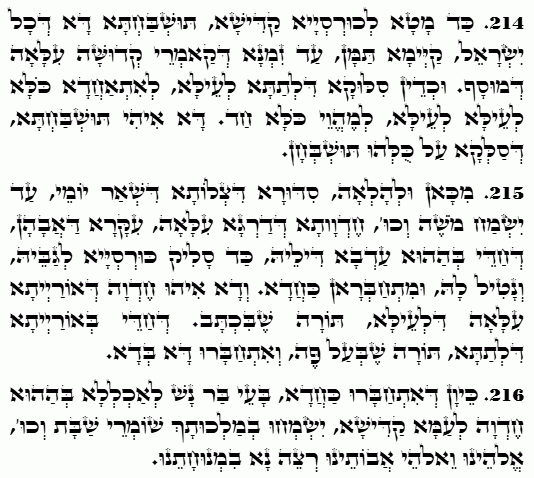
215. מִכָּאן וָהָלְאָה סִדּוּר הַתְּפִלָּה שֶׁל שְׁאָר הַיָּמִים, עַד יִשְׂמַח מֹשֶׁה וְכוּ’, הַשִּׂמְחָה שֶׁל הַדַּרְגָּה הָעֶלְיוֹנָה, עִקַּר הָאָבוֹת, שֶׁשָּׂמֵחַ בְּאוֹתוֹ חֵלֶק שֶׁלּוֹ כְּשֶׁהַכִּסֵּא עוֹלֶה אֵלָיו וְנוֹטֵל אוֹתָהּ, וּמִתְחַבְּרִים כְּאֶחָד. וְזוֹהִי שִׂמְחַת הַתּוֹרָה הָעֶלְיוֹנָה שֶׁלְּמַעְלָה, תּוֹרָה שֶׁבִּכְתָב. שֶׁשָּׂמֵחַ בַּתּוֹרָה שֶׁלְּמַטָּה, תּוֹרָה שֶׁבְּעַל פֶּה, וּמִתְחַבְּרִים זֶה עִם זוֹ.
216. כֵּיוָן שֶׁהִתְחַבְּרוּ כְּאֶחָד, צָרִיךְ אָדָם לְהַכְלִיל בְּאוֹתָהּ שִׂמְחָה אֶת הָעָם הַקָּדוֹשׁ, יִשְׂמְחוּ בְמַלְכוּתְךָ שׁוֹמְרֵי שַׁבָּת וְכוּ’, אֱלֹהֵינוּ וֵאלֹהֵי אֲבוֹתֵינוּ רְצֵה נָא בִמְנוּחָתֵנוּ.
.
Zohar Vayakhel
Continued from previous DZ
#214
When the praise reaches the holy Throne — which is Malchut — behold, this praise that all Israel recites stands there until the time when Israel recites the supernal Kedushah of Musaf — that is, “כֶּתֶר יִתְּנוּ לְךָ” etc. And then there is an ascent for those below to ascend above — that is, Malchut, which is the Throne, ascends to Ima, which is Binah, and Zeir Anpin ascends to Aba, which is the secret of the supernal point, so that everything unites in the top level above, in Aba and Ima (או”א), to be all one.
And then it is found that this praise El Adon, “אֵל אָדוֹן,” which has already ascended with Malchut to Binah, Binah recites it to the supernal King, which is Chokhmah (as above, #213) — this is the praise that ascends above all praises.
Notes:
The El Adon prayer is the climax of Shabbat morning praise; Israel recites it, ascends to Malchut (the Throne), and remains there until the Kedushah of Musaf (“Keter yitnu lecha”). At that moment, Malchut ascends to Binah (Ima), and Zeir Anpin ascends to Chokhmah (Aba/the supernal point), uniting all in perfect oneness at the highest levels. Binah then offers this praise to Chokhmah, making El Adon the supreme praise that rises above all others on Shabbat day, completing the supernal unification and revelation.
#215
From here onward, it is the order of the prayer as on the other days, until “יִשְׂמַח מֹשֶׁה” etc. That is, the joy of the supernal level, which is Tiferet, called Moshe, and this is the secret of Jacob, who is the essence of the Avot (אבות, patriarchs), the middle line that unifies Chessed (Abraham) and Gevurah (Isaac). He rejoices in that portion of his which is Malchut, when the Throne — which is Malchut — ascends to him and he takes her, and they unite together.
And this is the Simchat Torah above, which is Torah, the written Torah, which is Tiferet — rejoicing in the Torah below, which is Oral Torah, which is Malchut, and they unite one with the other.
Notes:
From the Kedushah of Musaf onward, the prayer follows the weekday structure until “Yismach Moshe,” which symbolizes the joy of Tiferet (Moshe/Yaakov, the central line unifying Chessed/Abraham and Gevurah/Isaac). Tiferet rejoices in receiving and uniting with Malchut (the Oral Torah) as she ascends to him. This represents the supernal Simchat Torah: Tiferet (Written Torah) delights in Malchut (Oral Torah), achieving complete union between the two aspects of Torah and the masculine-feminine divine structure on Shabbat.
#216
Once they have united together, a person must include the holy people in that joy and say: “יִשְׂמְחוּ בְמַלְכוּתְךָ שׁוֹמְרֵי שַׁבָּת וְעַם מְקַדְּשֵׁי שְׁבִיעִי” “They shall rejoice in Your kingdom, those who keep Shabbat and the people who sanctify the seventh day” etc. (from Yismach Moshe prayer continuation). “אֱלֹהֵינוּ וֵאלֹהֵי אֲבוֹתֵינוּ
רְצֵה נָא בִּמְנוּחָתֵנוּ” “Our God and God of our fathers, please find favor in our rest” (from the same section).
Notes:
After the union of Tiferet (Moshe/Jacob) with Malchut (the Throne/Oral Torah) on Shabbat, the individual must joyfully include all Israel in this divine rejoicing by reciting the continuation of “Yismach Moshe.” This prayer expresses collective celebration in Malchut’s kingship (“rejoice in Your kingdom”) and invokes the patriarchs’ desire for this rest, uniting the holy people with the supernal harmony and completing the ascent of Shabbat joy for all.
{||}

 Join Zohar Sparks - Telegram (Not a chat group)
 Join on WhatsApp (Not a chat group)
 Join on Signal (Chat is available only in this group)