 Previous: Shemot
Daily Zohar # 5045 – Shemot – When the morning stars sang together
Daily Zohar 5045
Hebrew translation:
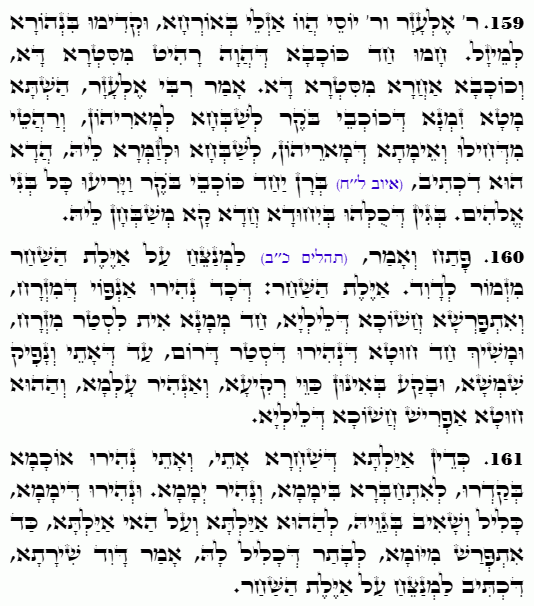
160. פָּתַח וְאָמַר, (תהלים כב) לַמְנַצֵּחַ עַל אַיֶּלֶת הַשַּׁחַר מִזְמוֹר לְדָוִד. אַיֶּלֶת הַשַּׁחַר – שֶׁכְּשֶׁמְּאִירִים פְּנֵי הַמִּזְרָח וְנִפְרָד חֹשֶׁךְ הַלַּיְלָה, יֵשׁ מְמֻנֶּה אֶחָד לְצַד מִזְרָח, וּמוֹשֵׁךְ חוּט אֶחָד שֶׁל חֹשֶׁךְ לְצַד דָּרוֹם, עַד שֶׁבָּא וְיוֹצֵא הַשֶּׁמֶשׁ, וּבוֹקֵעַ בְּאוֹתָם חַלּוֹנֵי הָרָקִיעַ וּמֵאִיר לָעוֹלָם, וְאוֹתוֹ חוּט מַפְרִיד אֶת חֹשֶׁךְ הַלַּיְלָה.
161. אָז בָּאָה אַיֶּלֶת הַשַּׁחַר, וּבָא אוֹר שָׁחֹר בְּקַדְרוּת לְהִתְחַבֵּר בַּיּוֹם, וּמֵאִיר הַיּוֹם. וְאוֹר הַיּוֹם כָּלוּל וְשָׁאוּב בְּתוֹכוֹ אֶת אוֹתָהּ הָאַיֶּלֶת. וְעַל הָאַיֶּלֶת הַזֹּאת, כְּשֶׁנִּפְרָד מֵהַיּוֹם אַחַר שֶׁכָּלָל אוֹתָהּ, אָמַר דָּוִד שִׁירָה, שֶׁכָּתוּב לַמְנַצֵּחַ עַל אַיֶּלֶת הַשַּׁחַר.
.
Zohar Shemot
Continued from previous DZ
#159
Rabbi Elazar and Rabbi Yossi were walking on the way, and they set out before daylight. They saw one star running from this side, and another star running from that side.
Rabbi Elazar said: Now the time has come for the morning stars to praise their Master, and they run from fear and awe of their Master, to praise and sing before Him.
This is the meaning of “בְּרֹן יַחַד כּוֹכְבֵי בֹקֶר וַיָּרִיעוּ כָּל בְּנֵי אֱלֹהִים”, “When the morning stars sang together, and all the sons of God shouted for joy” (Job 38:7). For all the stars in one unity praise before Him.
#160
He opened and said: “לַמְנַצֵּחַ עַל אַיֶּלֶת הַשָּׁחַר”, “For the conductor, upon the dawn of the deer” (Psalms 22:1). “אַיֶּלֶת הַשָּׁחַר” (Ayyélet ha-shachar, dawn of the deer) — its meaning is: when the face of the east begins to shine and the darkness of night spreads out, there is one appointee on the east side, which is the secret of the middle line. He draws a single thread of light from the south side, which is the right line, until the sun comes out and breaks through the windows of the firmament and illuminates the world. And that thread that he draws from the south side passes through the darkness of the night.
The meaning is: When the Nukva is only in the aspect of the left, the Chokhmah in her cannot shine due to the lack of Chassadim, and darkness of the night is drawn from her. Then the middle line strengthens with the power of the masach of chirik (וִ) within it and draws one thread of the light of Chassadim from the south side, which is the right, until the Chokhmah in the Nukva is clothed in Chassadim. The light of the sun, which is the middle line, bestows upon her at the time of its dominion, which is the day. Then the Nukva is completed in the secret of the day’s zivug (union).
And the matter of the appointee who draws the thread is the מ”ן (female water) and masach of chirik that ascend to the middle line, which is Zeir Anpin.
Notes:
“נֵץ הַחַמָּה” (Netz HaChamah) refers to the precise moment of sunrise, when the sun’s disk first appears on the horizon. In Jewish law and Kabbalah, this moment marks a powerful transition from concealment to revelation, from night (din) to day (rachamim). The sages teach that praying Shacharit at Netz is the most ideal time, as one aligns prayer exactly with the awakening of divine light in the world (Berakhot 9b:9). From a Kabbalistic perspective, Netz corresponds to the illumination of Tiferet (middle line), when compassion flows freely, and prayers ascend without obstruction. At this moment, the channels between the upper and lower worlds are most open, allowing one’s tefillah to rise with clarity, harmony, and acceptance. Praying at Netz is therefore not only a matter of precision, but an act of spiritual alignment—meeting the day at the exact point where light is born.
#161
And then comes “אַיֶּלֶת הַשַּׁחַר”, “the dawn of the deer” (Psalms 22:1), that is, a black light comes in the darkness, which is the Nukva in the secret of אַיֶּלֶת הַשַּׁחַר, to connect with the day, which is Zeir Anpin, and the day shines. And the light of the day includes and draws into itself that deer, which is the Nukva. And upon this deer, when it separated from the day after it had already included her, David said a song, as it is written: לַמְנַצֵּחַ עַל אַיֶּלֶת הַשַּׁחַר—“For the conductor, upon the dawn of the deer” (Psalms 22:1).
{||}

 Join Zohar Sparks - Telegram (Not a chat group)
 Join on WhatsApp (Not a chat group)
 Join on Signal (Chat is available only in this group)