
 Previous: Mishpatim
Daily Zohar # 5075 – Mishpatim – His wife became his mother
Daily Zohar 5075
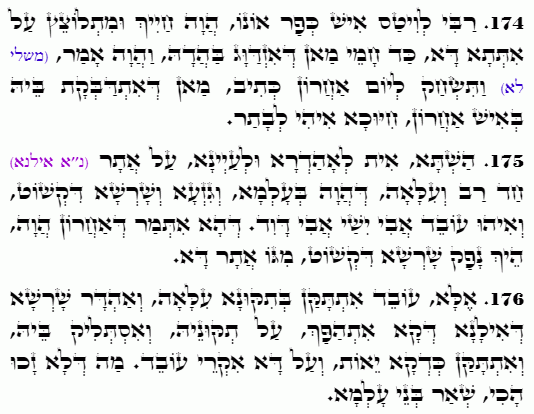
Hebrew translation:
175. עַכְשָׁו יֵשׁ לַחֲזֹר וּלְעַיֵּן עַל מָקוֹם (נ”א אִילָן) אֶחָד גָּדוֹל וְעֶלְיוֹן שֶׁהָיָה בָּעוֹלָם, וְגֶזַע וְשֹׁרֶשׁ שֶׁל אֱמֶת, וְהוּא עוֹבֵד אֲבִי יִשַׁי אֲבִי דָוִד, שֶׁהֲרֵי נֶאֱמַר שֶׁהָיָה אַחֲרוֹן, אֵיךְ יָצָא שֹׁרֶשׁ אֱמֶת מֵהַמָּקוֹם הַזֶּה?
176. אֶלָּא עוֹבֵד נִתְקָן בְּתִקּוּן עֶלְיוֹן, וְחָזַר הַשֹּׁרֶשׁ שֶׁל הָאִילָן שֶׁהִתְהַפֵּךְ עַל תִּקּוּנוֹ, וְהִתְעַלָּה בּוֹ וְהִתְתַּקֵּן כָּרָאוּי, וְעַל זֶה נִקְרָא עוֹבֵד, מַה שֶּׁלֹּא זָכוּ כָּךְ שְׁאָר בְּנֵי הָעוֹלָם.
.
Zohar Mishpatim
Continued from previous DZ
#174
Rabbi Levitas, a man of Kfar Ono, would laugh and jest about this woman whenever he saw someone uniting with her.
And he would say: “וַתִּשְׂחַק לְיוֹם אַחֲרוֹן”— “And she laughs at the last day” (Proverbs 31:25).
It is written: Whoever unites with the last man, it is laughter afterward.
Notes:
Rabbi Levitas of Kfar Ono mocks a woman who unites with men, quoting וַתִּשְׂחַק לְיוֹם אַחֲרוֹן (Proverbs 31:25) to imply that such unions bring ridicule or downfall in the end. The jest highlights the spiritual consequences of improper attachments.
#175
Now we must return and look at one great and upper place that was in the world, and the true branch and root, and it is Obed(עוֹבֵד), the father of Jesse(יִשַׁי), the father of David. For we have learned that the reincarnated one is the last, and Obed was the gilgul of Mahlon, who died without children — and how did a true root come out from this place?
Notes:
This Zohar discussion concerns the spiritual lineage of David through Obed (עוֹבֵד). Obed is explained as the gilgul (reincarnation) of Mahlon(מחלון) (Naomi’s son who died childless). The question arises: how can a true holy root (leading to Jesse and David) emerge from such a place of lack and death? This sets up the teaching on rectification through gilgul and divine mercy.
#176
And he answers: Rather, Obed was rectified with the upper rectification, and the root of the tree that was turned over — that his wife became his mother, etc. (as mentioned above in #130) — he returned it to its rectification, and he was elevated in it and rectified as proper. And therefore he was called Obed, which is the language of servitude(עבֵד, עוֹבֵד), what the other people of the world did not merit.
Notes:
Obed, as the gilgul of Mahlon, received an upper rectification. The “turned tree” (his wife becoming his mother through Yibum) was restored to proper order, elevating and rectifying him. Thus, his name עוֹבֵד (Obed, from עבדות/servitude) reflects humble service, a merit not attained by others.
{||}

 Join Zohar Sparks - Telegram (Not a chat group)
 Join on WhatsApp (Not a chat group)
 Join on Signal (Chat is available only in this group)