
 Previous: Mishpatim
Daily Zohar # 5076 – Mishpatim – Why did he cry?
Daily Zohar 5076
Hebrew translation:
178. בָּכָה אוֹתוֹ זָקֵן וְאָמַר, אִי זָקֵן זָקֵן, וְלֹא אָמַרְנוּ לְךָ שֶׁנִּכְנַסְתָּ לַיָּם הַגָּדוֹל?! עַכְשָׁו אַתָּה הוּא בְּתוֹךְ הַתְּהוֹמוֹת הַגְּדוֹלִים. הִתְתַּקֵּן לַעֲלוֹת. זָקֵן זָקֵן, אַתָּה גָּרַמְתָּ לָזֶה, שֶׁאִלְמָלֵא הָיִיתָ שׁוֹתֵק בַּתְּחִלָּה, הָיָה נָאֶה לְךָ, אֲבָל עַכְשָׁו לֹא יָכֹלְתָּ וְאֵין מִי שֶׁיֹּאחֵז בְּיָדְךָ, אֶלָּא אַתָּה בִּלְבַדְּךָ. קוּם זָקֵן וַעֲלֵה בְמַעֲלָה.
.
Zohar Mishpatim
Continued from previous DZ
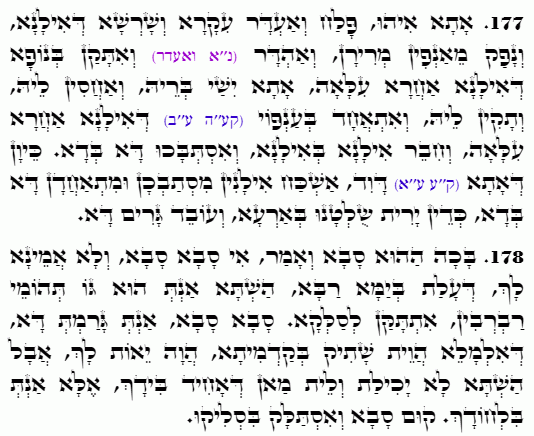
#177
He came — Oved (Obed) — and served, cultivating and restoring the essence and root of the Tree. He emerged from the bitter waters, returned, and repaired the branches of the Tree, which is the Kingdom (Malchut).
Then came Yishai (Jesse), his son, who strengthened it and perfected it. He took hold of the branches of another, higher Tree, which is Zeir Anpin, and he joined one Tree to another, so that they became interwoven and bound together.
When David came, he found the Trees — Zeir Anpin and Malchut — already intertwined and firmly attached to one another. Then he inherited sovereignty over the land. And Oved was the cause of all this.
Notes:
The Zohar teaches that true kingship and authority arise only after a progressive spiritual rectification: first repairing Malchut, then uniting it with Zeir Anpin, and only then revealing sovereignty in the world. David’s reign was possible not by his own effort alone, but because the Tree of Kingship had already been healed, strengthened, and unified by Obed and Jesse.
This reveals a central principle: redemption and leadership emerge from continuity, humility, and hidden spiritual labor across generations.
#178
That old man wept and said to himself: “Alas, old man, old man!
Did I not tell you that you entered the Great Sea? Now you are within the great depths. Will you be able to repair yourself and rise?
Old man, old man — you caused this yourself. For if you had remained silent at the beginning, it would have been better for you. But now you cannot remain silent. And there is no one to grasp your hand, except you yourself alone. Arise, old man, and ascend by the ascent.”
Notes:
This passage is a deeply introspective and symbolic moment in the Zohar. The “old man” represents a sage who has entered profound mystical knowledge — referred to as the Great Sea, a classic Zoharic symbol for supernal wisdom (Chokhmah) or the depths of Torah’s inner secrets.
By entering the “Great Sea,” he has gone beyond safe intellectual boundaries. He now finds himself in the greatest abyss (tehomot gedolim)— a place of spiritual danger where one can either ascend or drown. The Zohar emphasizes personal responsibility: there is no external help available. No teacher or guide can pull him out. Silence at the earlier stage would have preserved balance, but now engagement is unavoidable.
The only remaining option is aliyah — ascent — through inner rectification, humility, and effort. The phrase “ascend by the ascent” implies a measured, disciplined elevation, not a reckless leap.
This mirrors the teaching of the sages regarding entering Pardes (the mystical orchard): once a person penetrates deep secrets, retreat is no longer possible — only correct ascent remains.
{||}

 Join Zohar Sparks - Telegram (Not a chat group)
 Join on WhatsApp (Not a chat group)
 Join on Signal (Chat is available only in this group)