
 Previous: Vayikra
Daily Zohar # 5130 – Vayikra – Returning the lost
Daily Zohar 5130
Hebrew translation:
.
Zohar Vayikra
Continued from previous DZ
#273
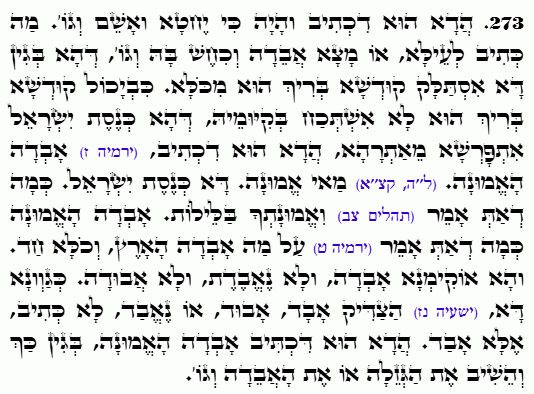
This is what is written: “וְהָיָה כִי יֶחֱטָא וְאָשֵׁם” etc. (Leviticus 5:23). What is written above? “אוֹ מָצָא אֲבֵדָה וְכִחֶשׁ בָּהּ” etc. (Leviticus 5:22). For the sinner causes a defect above, and because of this, the Holy One, blessed be He, withdraws from everything. As it were, the Holy One, blessed be He, is not found in His existence, for Kenesset Israel — which is Malchut — is separated from her place. This is what is written: “אָבְדָה הָאֱמוּנָה” “Faith has perished” (Jeremiah 7:28). What is “faith”? It is Kenesset Israel, as it is said: “וֶאֱמוּנָתְךָ בַּלֵּילוֹת” “and Your faithfulness in the nights” (Psalms 92:3), and “night” is Malchut. “Faith has perished” is as it is said: “עַל מָה אָבְדָה הָאָרֶץ” “For what reason has the land perished?” (Jeremiah 9:11). And it is all one, for Malchut is called “faith” and is called “land.”
And we have established that “אָבְדָה” (perished) is written, indicating that Malchut lost her husband, Yessod. It is not written “נֶאֶבְדָה” or “אֲבוּדָה,” which would mean that she herself was lost. In the same way, it is written “צַדִּיק אָבַד” “the righteous has perished” (Isaiah 57:1) — it is not written “אָבוּד” or “נֶאֱבַד,” but “אָבַד,” which means that he lost his female partner, who is Malchut. And this is what is written: “אָבְדָה הָאֱמוּנָה.”
Because of this it is written: “וְהֵשִׁיב אֶת הַגְּזֵלָה אוֹ אֶת הָאֲבֵדָה” etc. Malchut, who was damaged by his sin, is called “lost thing” (אֲבֵדָה). And he must restore the lost thing to the tzaddik — who is Yessod — who lost her.
Notes:
The Zohar interprets the guilt-offering laws (Leviticus 5) on a deep level. When a person sins, especially through denial or false oaths, he causes a separation between Yessod (the tzaddik) and Malchut (the Shekhinah/faith/land). This separation is described as Malchut “losing” her husband or Yessod “losing” his partner. The term “אָבְדָה” (lost) is used precisely to indicate this relational loss, not the destruction of Malchut herself.
The rectification requires “returning the lost thing” — restoring Malchut to Yessod through teshuvah and restitution. Only then is the damage repaired and the divine union reestablished. This reveals that many sins, particularly those involving dishonesty, directly damage the connection between the male aspects and female aspects of holiness, and true atonement involves actively restoring that holy union.
{||}

 Join Zohar Sparks - Telegram (Not a chat group)
 Join on WhatsApp (Not a chat group)
 Join on Signal (Chat is available only in this group)