
 Previous: Vayikra
Daily Zohar # 5144 – Vayikra – It is to the guilt of the people
Daily Zohar 5144
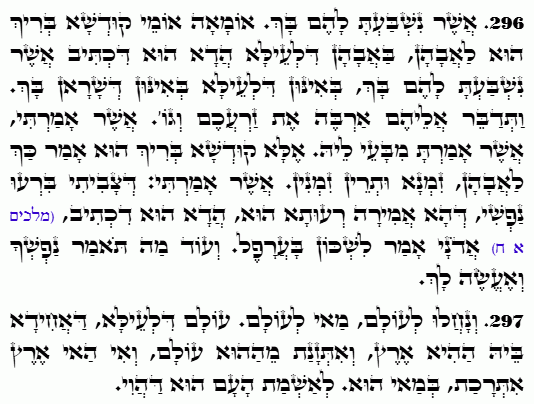
Hebrew translation:
297. וְנָחֲלוּ לְעֹלָם, מַה זֶּה לְעֹלָם? הָעוֹלָם שֶׁלְּמַעְלָה שֶׁאֲחוּזָה בּוֹ אוֹתָהּ אֶרֶץ, וְנִזּוֹנֵית מֵאוֹתוֹ עוֹלָם. וְאִם הָאָרֶץ הַזּוֹ מִתְגָּרֶשֶׁת, מִמַּה זֶּה? לְאַשְׁמַת הָעָם הוּא נִהְיָה.
.
Zohar Vayikra
Continued from previous DZ
#296
“אֲשֶׁר נִשְׁבַּעְתָּ לָהֶם בָּךְ” “which You swore to them by Yourself” (Exodus 32:13). The Holy One, blessed be He, swore an oath to the patriarchs by the supernal patriarchs — which are Chessed, Gevurah, and Tiferet of Zeir Anpin. This is what is written: “אֲשֶׁר נִשְׁבַּעְתָּ לָהֶם בָּךְ” “which You swore to them by Yourself” — “by Yourself,” that is, by those above, by those that dwell within You. That is, He swore by His own Chessed- Gevurah- Tiferet.
“And You spoke to them: I will multiply your seed, etc., which I said.” He asks: It says “אֲשֶׁר אָמַרְתִּי” “which I said” — it should have said “אֲשֶׁר אָמַרְתָּ” “which You said.” For one cannot say that the Holy One, blessed be He, said “which I said,” since it is now that He swore and told them this. Rather, it must be that Moshe said this, and he should have said: “which You said.”
And he answers: Rather, the Holy One, blessed be He, said this to the patriarchs once and twice, and it is possible to say “which I said” — that is, that He already said to them. Moreover, “אֲשֶׁר אָמַרְתִּי” means “which I desired with the desire of My soul.” And it is not necessary to say that He already told them. For “אמירה” (saying) means will/desire, as it is written: “אֲדֹנָי אָמַר לִשְׁכֹּן בָּעֲרָפֶל” “YHVH said He would dwell in thick darkness” (1 Kings 8:12), and further: “מַה תֹּאמַר נַפְשְׁךָ וְאֶעֱשֶׂה לָּךְ” “What does your soul say, and I will do for you” (2 Samuel 9: whatever?).
#297
“וְנָחֲלוּ לְעֹלָם” “And they shall inherit forever” (Exodus 32:13). He asks: What is “forever”?
And he answers: That is the supernal world, which is Zeir Anpin, for this land — which is Malchut — is attached to him and nourished from him. And if this land is sent into exile and is not attached to Zeir Anpin, why is it “to the guilt of the people”? And therefore it is written, “and they shall inherit forever” — that is, that Malchut shall be united with Zeir Anpin forever, and shall not go into exile.
And with this, he explained the verse “If the anointed priest shall sin” — that he, who is Zeir Anpin, shall sin, meaning he withholds the union from Malchut, so that she goes into exile — “it is to the guilt of the people.”
Notes:
Moshe’s prayer after the Golden Calf invokes the patriarchs and Hashem’s oath to them. The unusual phrasing “which You swore to them by Yourself” refers to Hashem swearing by His own inner attributes (Chessed- Gevurah- Tiferet of Zeir Anpin). The phrase “which I said” is Moshe speaking, yet it also alludes to Hashem’s inner will and desire.
The promise “and they shall inherit forever” emphasizes that Malchut must remain permanently united with Zeir Anpin. When sin breaks this union, Malchut is exiled — and this separation is “to the guilt of the people.” The entire verse shows that the sin of the Golden Calf caused a rupture between Zeir Anpin and Malchut, leading to the Shekhinah’s exile. Moshe’s plea is for the restoration and eternal maintenance of this divine union.
{||}

 Join Zohar Sparks - Telegram (Not a chat group)
 Join on WhatsApp (Not a chat group)
 Join on Signal (Chat is available only in this group)