
 Previous: Vayikra
Daily Zohar # 5146 – Vayikra – And he shall atone for himself first
Daily Zohar 5146
Hebrew translation:
.
Zohar Vayikra
Continued from previous DZ
#300
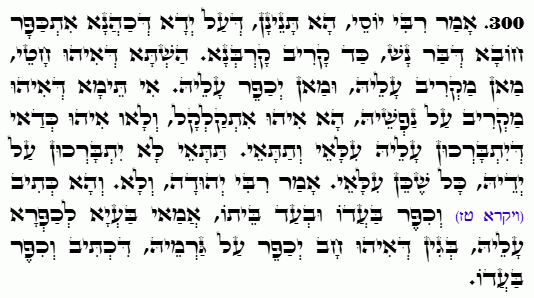
Rabbi Yitzchak said: Behold, we have learned that through the priest the sin of a person is atoned for, when he offers a sacrifice on his behalf.
He asks: Now, that he himself has sinned, who offers on his behalf, and who will atone for him? If you say that he offers for himself — behold, he is flawed, and it is not fitting that upper and lower levels should be blessed through him. For if the lowers are not blessed through him (as explained in #298), all the more so the upper levels.
Rabbi Yehuda said: Not so, for behold it is written: ‘וְכִפֶּר בַּעֲדוֹ וּבְעַד בֵּיתוֹ” “And he shall atone for himself and for his house” (Leviticus 16:6, 11). And why does it need to say afterward that he atones for himself because he sinned, when he can atone for himself, as it is written “וְכִפֶּר בַּעֲדוֹ” “And he shall atone for himself “?
Notes:
The Zohar raises a difficulty: If the High Priest himself sins, how can he atone for others when he is flawed? The question implies that a defective priest cannot effectively bring blessings to the upper and lower worlds.
Rabbi Yehuda resolves this by pointing to the explicit verse in the Yom Kippur service: the High Priest must first atone for himself and his household before atoning for the people. This teaches that even the anointed priest requires personal rectification before he can serve as a channel for atonement for Israel. The teaching underscores the purity required of the one who stands between the people and the divine, as well as the necessity of self-rectification even for the greatest spiritual leaders.
{||}

 Join Zohar Sparks - Telegram (Not a chat group)
 Join on WhatsApp (Not a chat group)
 Join on Signal (Chat is available only in this group)