
 Previous: Vayikra
Daily Zohar # 5205 – Vayikra – David’s case
Daily Zohar 5205
Hebrew translation:
406. וְאִם תֹּאמַר, דָּוִד, שֶׁהָיָה קָם בַּחֲצוֹת הַלַּיְלָה, לָמָּה הִתְעוֹרְרוּ עָלָיו בְּדִין? אֶלָּא דָּוִד שׁוֹנֶה, שֶׁהוּא עָבַר בְּמַה שֶּׁנִּקְשַׁר, וְצָרִיךְ דִּין, וּבְמַה שֶּׁעָבַר הוּא נִדּוֹן. הוּא חָטָא כְּנֶגֶד הַמַּלְכוּת הַקְּדוֹשָׁה וְלִירוּשָׁלַיִם הַקְּדוֹשָׁה, וּמִשּׁוּם כָּךְ גֹּרַשׁ מִירוּשָׁלַיִם, וְהַמַּלְכוּת הוּסְרָה מִמֶּנּוּ, עַד שֶׁהִתְתַּקֵּן כָּרָאוּי (וְנֶעֱנַשׁ).
.
Zohar Vayikra
Continued from previous DZ
#405
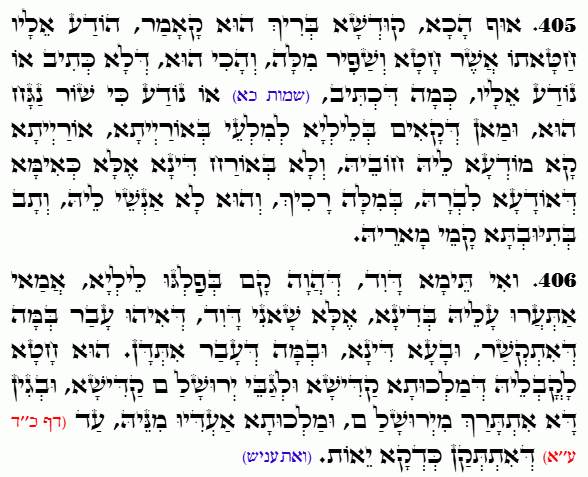
Also here, the Holy One, blessed be He, said, “הוֹדַע אֵלָיו חַטָּאתוֹ אֲשֶׁר חָטָא” “make known to him his sin which he has sinned” (Leviticus 4:23). And the matter is good and so it is, for it is not written “or it became known to him,” as it is written ”אוֹ נוֹדַע כִּי שׁוֹר נַגָּח הוּא ” “or it is known that the ox is a gorer” (Exodus 21:36). And one who rises at night to engage in Torah, the Torah makes known to him his sin, and not in the way of judgment, but like a mother making known to her son with soft words, and he does not forget, and returns in repentance before his Master.
Notes:
For one who studies Torah at night, revelation of sin comes gently like a mother speaking softly to her child, leading to ready repentance. This differs from ordinary cases where sin is revealed through judgment.
#406
And if you say, David, who rose at midnight, why did they awaken against him to remind him of his iniquity with judgment? And he answers, David is different, for he sinned in what he was connected to, that is, in Malchut, and he needs judgment, and with what he sinned, he is judged. For he sinned against the holy Malchut, to which he was connected, for he was a chariot to her, and to the holy Jerusalem, which is against Malchut, and therefore he was driven from Jerusalem, and the kingship was taken from him, until he was fixed and did repentance as is fitting.
Notes:
David’s case is unique because his sin touched Malchut, to which he was deeply connected as a chariot. Judgment was therefore necessary, leading to his temporary loss of Jerusalem and kingship until full repentance restored him.
Rabbi Shimon asks: Who causes the sinner to know his sin? The Zohar answers that when a person sins and does not repent, his own soul ascends and testifies before the Holy One, blessed be He. Then the Holy One commands the Shechinah (“Knesset Yisrael”) to make the person aware of his sin by sending events or judgments that awaken him to repent (Teshuva).
The Zohar then adds an even more intimate teaching:
A person who rises at night to study Torah is informed of his sin by the Torah itself, like a loving mother who gently tells her child, so that he will repent of his own accord.
This is one of the clearest Zohar statements that Hashem, in His mercy, does not merely punish a person for sin. Rather, He first seeks to awaken the person’s conscience and bring him back through teshuvah.
The Zohar explains that the mitzvah of “הוֹכֵחַ תּוֹכִיחַ אֶת עֲמִיתֶךָ” (Kedoshim) means that the Holy One rebukes a person privately first because He loves him. Only if the person refuses to respond does the rebuke become more public or more severe. The purpose is always to lead the person to repentance, not to disgrace him.
The sequence described is: first, a gentle inner awakening; then subtle hints; then afflictions or life events that encourage self-examination; only afterward, if necessary, stronger measures.
The Zohar explains that when a person ignores his wrongdoing,
“his very soul rises and testifies before the Holy One, blessed be He.”
This is profound. The “accuser” is not initially an external force but the person’s own neshamah, which cannot tolerate separation from its Divine source. The soul longs to return to purity and thus becomes the catalyst for the individual’s awakening.
Rabbi Chaim Vital, transmitting the teachings of the Ari, repeatedly emphasizes that Divine Providence guides a person’s thoughts and experiences toward teshuvah. Sudden recollections of past failings, feelings of remorse during prayer, or moments of deep introspection are often understood as opportunities granted from above. The goal is not despair, but tikkun—correct and return.
According to the Zohar, if a forgotten sin suddenly comes to mind during prayer, Torah study, or in the quiet of the night, one should not immediately dismiss it as random psychology. It may be a gift from Heaven—an invitation from Hashem to complete a spiritual repair while the opportunity is still open.
This understanding transforms regret into hope. The remembrance itself is an expression of Divine mercy. Hashem is not reminding the person in order to condemn him, but to give him the privilege of confessing, making amends where possible, and returning to Him. As the Zohar teaches, the Torah herself can become like a compassionate mother, gently revealing what needs to be corrected so that the soul may return to its source.
{||}

 Join Zohar Sparks - Telegram (Not a chat group)
 Join on WhatsApp (Not a chat group)
 Join on Signal (Chat is available only in this group)