
 Previous: Beresheet
Daily Zohar # 5232 – Beresheet – He planted the cedars of Lebanon
Daily Zohar 5232
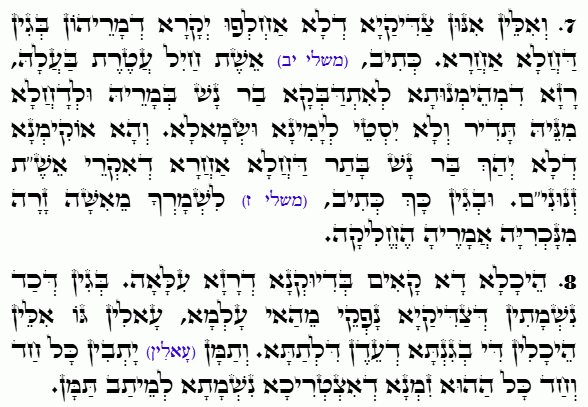
Hebrew translation:
428. וּבוֹ אֲחוּזִים נְטִיעוֹת אֲחֵרוֹת עֶלְיוֹנוֹת, וְהֵם נִקְרָאִים אַרְזֵי הַלְּבָנוֹן. מִי הֵם אַרְזֵי לְבָנוֹן? אוֹתָם שִׁשָּׁה יָמִים עֶלְיוֹנִים, שֵׁשֶׁת יְמֵי בְרֵאשִׁית שֶׁאָמַרְנוּ. אַרְזֵי לְבָנוֹן אֲשֶׁר נָטָע, נְטִיעוֹת וַדַּאי שֶׁהִתְקַיְּמוּ אַחַר כָּךְ.
.
Zohar Beresheet
Continued from previous DZ
#427
“עֵץ הַדַּעַת טוֹב וָרָע” “the Tree of Knowledge of good and evil” (Genesis 2:9), which implies that it is in the middle between good, which is the right, and evil, which is the left. And he raises a difficulty: why is it called thus, for this tree is not in the middle, but rather it leans more to the left than to the right. And he answers: But what is the Tree of Knowledge of good and evil — that is, why is it called thus? Rather, because it draws from both sides, right and left, and knows them — that is, it clings to them like one who draws from the sweet and from the bitter. And because it draws from both sides and knows them, that is, it clings to them, and it rests within them, therefore it is called by the name “good and evil.” The meaning is that for this reason the Nukva is called the Tree of Knowledge of good and evil, for there are two points in the Nukva: one that is sweetened from Binah, which is the secret of good, and one from herself that is not sweetened, which is the secret of evil. And she draws from both of them together; therefore she is called the Tree of Knowledge of good and evil.
#428
And all the plantings, that is the sefirot of Malchut, rest upon them — upon the two points of good and evil mentioned above — for these points are the aspect of Yessod of the Nukva, which is under all the sefirot. And in it other upper plantings take hold, that is Chessed-Gevurah-Tiferet-Netzach-Hod-Yessod of Zeir Anpin, from which the Nukva is built at the time of her greatness (גדלות), and they are called cedars of Lebanon. And he asks, Who are these cedars of Lebanon? And he says that they are the six upper days, which are the six days of Beresheet that we spoke of. It is written, “אַרְזֵי לְבָנוֹן אֲשֶׁר נָטָע” “the cedars of Lebanon which He planted” (Psalms 104:16). The verse calls them plantings because they are certainly plantings that were established after they were uprooted from their place and planted in another place, as will be explained before us.
Notes:
The Tree of Knowledge is called “good and evil” not because it stands in the middle, but because the Nukva draws from two points within herself: one sweetened by Binah (good) and one that remains unsweetened (evil)—all the sefirot of Malchut rest upon these two points in her Yessod. The upper plantings that take hold there are the six sefirot of Zeir Anpin (the cedars of Lebanon), which were uprooted from their original place and replanted to build the Nukva in her state of greatness.
{||}

 Join Zohar Sparks - Telegram (Not a chat group)
 Join on WhatsApp (Not a chat group)
 Join on Signal (Chat is available only in this group)